Do you need a publishing consultant?

When I started my own business, the world of self-publishing was just getting off the ground.

At the time there were often telltale signs that a book was not traditionally published, such as:
 

  • publishing consultant - proofreaderThe use of courier font
  • No front or back matter, author bio, acknowledgements, etc.
  • Very poorly designed (or not designed) jackets
  • Xerox paper that glowed with a white/gray hue
  • At least a half-dozen errors/typos on the first and subsequent pages
  • Lack of typesetting and design

These are the things that stuck out the most, and as a result of the obviously poorer quality books themselves, the discrimination in the media against the self-published was considered justified. For a while, I considered starting a publishing consultant business whereby I would act as the Managing Editor. I would walk the author through all of the stages of publication so that the book would look more like, well, an actual book.

Boy did I learn to have an appreciation for all of those in-house managing editors, who must have had minds like traps to keep track of all of the details involved in preparing a book for publication.

Some things they need to keep track of include:


  • ISBNs
  • Bar codes
  • Jacket designers
  • Interior book designers
  • Front and back matter production
  • Library of Congress data
  • Copyright
  • Content editors
  • Line editors
  • Copyeditors
  • Page count/price of printing
  • Paper selection
  • Page proofs
  • Resubmission of pages after a final OK from the author
  • Submission of jacket and manuscript for printing (hopefully so they end up together)
  • E-book formatting for multiple platforms

It is an arduous list and honestly, I knew it wasn’t going to be for me as the core of a business. I’m a people person, a media relations strategist, a brand marketing consultant—not someone who is going to love keeping track of the dry details of book production.
But as the saying goes, “someone’s gotta do it” and there are publishing consultants out there who do work with authors through the entire process making sure all of the details are managed. These people know where to go to get the job done, either using their own employees or a group of subcontractors.

If you want to consider hiring a publishing consultant or company there are some things to keep in mind:


  • Find out how they charge—is it a project fee or hourly rate?
  • Take your list of things you need to have done for your book (like the one I have put together above). Find out how these items are accomplished and what the fees are— are these things a part of the project or will these entities charge their own hourly fees on top of what you are already paying?
  • How long will the process take?
  • What will you need to do to?
  • What projects have they recently completed and can you see some of them?

As with any contractor or consultant you hire (including a publicist), you will want to get as much information as you can so there are fewer surprises. Remember you are new at this and there are no bad questions.

You can also choose to be your own managing editor. For this path I would recommend researching how others have done it by visiting various indie-publishing websites such as the Independent Book Publishers Association (IBPA), the Alliance for Independent Authors (ALLi) or Where Writers Win.

We have come a long way from the days of courier font, and fortunately there are many more reputable resources free and fee-based that will help you take care of you and your book that will give you an advantage when it comes to approaching media, bookstores, and selling online.
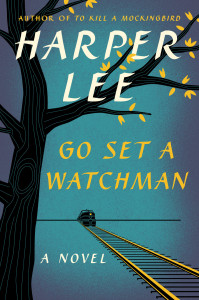
To Publish or Not to Publish: Go Set a Watchman

go set a watchman wikipediaMany years ago, I had the occasion to work with one of Harper Lee’s unauthorized biographers, Charles Shields. As the publicity director for the publisher, the thought of promoting the story of one so intensely famous in the book world had a lot of potential. In reality what I and my senior publicist found was A) Harper Lee was not about to start talking to the press, because this was an “unauthorized” biography and she hadn’t given an interview since 1964. B) there was a tight community of “friends” around Ms. Lee including Samuel Pinckus, who had been interviewed by Mr. Shields, but that was as far as they were going to go with it. Fortunately, the mystique surrounding the woman who was a one book wonder, literally, was very real and the review community came on board to add their opinion on Mr. Shield’s portrayal.

In publishing everyone wants to have the next “whatever was big the last time” such as Harry Potter, The Bridges of Madison County (remember that anyone?), The Secret, Twilight, Lovely Bones, etc. The amount of money at stake is staggering for the book world when most of the time books don’t earn out the advances paid to authors. The circumstances surrounding Go Set a Watchman are particularly interesting in that this wasn’t a new novel, it was actually a draft of what became the most beloved book of all time. The attorney who found it in the safety deposit box contacted the publisher right away—not any of those friends in the tight knit circle around Ms. Lee. In fact many of those people had been banned from her nursing home room many months/years before. The multi-million dollar question is really, did Ms. Lee ever intend for this book to be published? I would say at best she would never have pursued this course on her own but at this time in her life she didn’t much care, and more likely absolutely not, based on my experience working with her group down in Alabama and based on the attorney and her actions.

Harper Lee was a woman of routines. She came from a small town, and kept with the crowd in the town she had known forever. She didn’t make new and glamorous friends, had no major ambitions for fame, and according to a Bloomberg article she still reaps $3.2 million a year from Mockingbird, so she really didn’t need the money. Add to this her being 89 years old and interred in a nursing home, and you can’t help wondering if something is fishy in Denmark.

What we know about the lawyer is that she worked with the Lee’s for a long time in Alice Lee’s legal practice. She took over the practice after Alice died. She and her husband have started a Mockingbird Foundation (Bloomberg), which I have to think is a vehicle for storing the major money coming from the deal. Although Harper Lee is named at the foundation, her attorney has power-of-attorney so in essence, she speaks and signs for Ms. Lee.

For all the people in the world who have wished for a follow up to Mockingbird, I am happy that there is something to fill the void. The “controversy” about Atticus is more about whether or not you like the book and is a subject for book groups, not the national news media. The real story here that has been glossed over is whether or not an old woman who did not stray from a very clear path and intention was bamboozled into doing something she would not have done, had she had the capacity to reason through the situation completely on her own. If we follow the path of Ms. Lee’s attorney now and into the future, I suspect we will find a very wealthy woman who bided her time and took advantage of a family she pegged as a money train a long time ago.

Self-Publishing 101: Front Matter and Back Matter—More Competitive Editorial Strategies for Making your Book Stand Out

In a previous post I talked about how to make sure your book isn’t discarded by a review or media outlet because it “looks” self-published.  I emphasized how important it is to have an editor and an interior book designer work with you on the final product.  Here I am going to reveal the mysteries of front and back matter, which is what we used to call it when I started in publishing.  I have no idea of what people say about it now, but you will find this format in every traditionally published book and in more and more independently published ones as well.  Keep in mind that as tedious as this post might seem to be, I had to do this for quite a few books when I was an editorial assistant years ago.

End Papers: The very first and last physical pages of the book, often a higher quality, thicker paper that may or may not have illustrations.  Generally speaking you will find these more often in hard cover books.  It is expensive to do this and most books do not even have them.

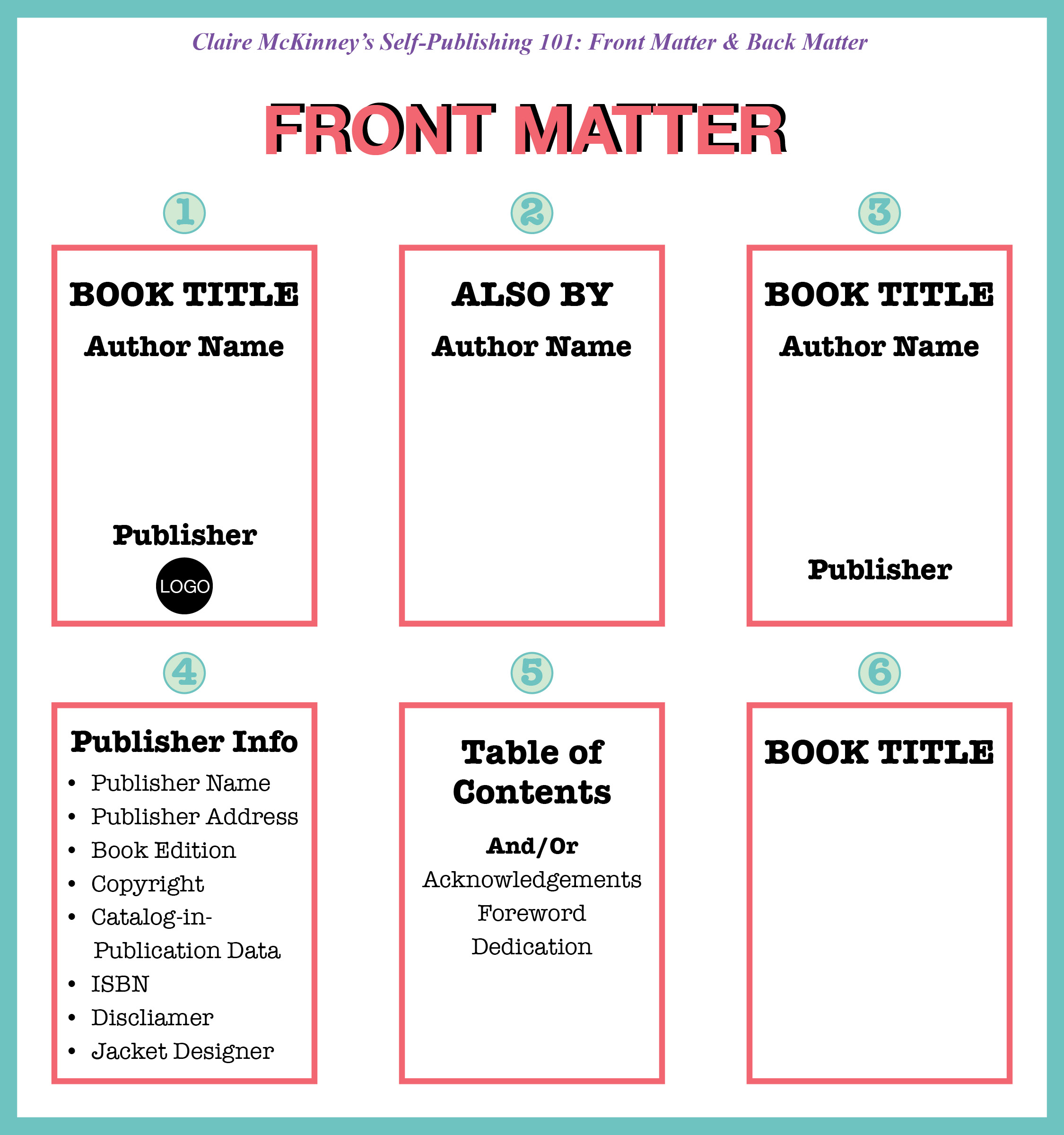
Front Matter: The next few pages of the physical book will include:

  • On the front the title//logo and name of publisher
  • On the back could be a list of  additional titles by this same author
  • Title page with the author/title/and publisher’s name with or without the logo
  • On the reverse side you have all of the vitals related to the book such as the publisher’s name and address/the number of the edition of the book/the copyright information/the Catalog-In-Publication data/the ISBN/Disclaimer/jacket designer’s name/and other detailed items vary by publisher and book
  • Next pages could be a Table of Contents/Acknowledgements/Foreword/Dedication
  • Finally another page that restates the title of the book

Front Matter

Back Matter: Yes, the very last pages after the story has been told will include:

  • A blank page
  • Acknowledgements page
  • Author’s Note page
  • Author’s Bio page
  • Perhaps another blank page

Back Matter

As you can see the back matter leaves a bit of room for preferences on your part.  There are some things like the acknowledgements that can be before or after the actual text.  Regardless though just like not printing your book in courier font (I used to see quite a few of these) if someone opens the jacket and is immediately faced with the guts of the story and not a slower build of information, it will be noticed.

So check out some books on your shelves and see what I’m talking about.  Not particularly exciting stuff here, but necessary nonetheless. 

Self-Publishing: How to Produce a Good Looking Book

book editorHaving been raised by an academic who learned everything from a book, when I decided to return to New York City to be a professional actor, I sought out a manual called How to Be a Working Actor.  Unfortunately I’ve found a lot of “how to” books contain pithy and not very useful advice.  But the one thing that stuck with me from this one—I think because I was shocked that it was actually in there—was about appearance.  The book said when you go to auditions you need to be clean, body and clothing, and that you should show up on time.  It was the cleanliness part that threw me: did people actually expect to get jobs if they had a trail of dirt and flies around them like Pigpen in the Peanuts cartoons?

The point is, if you are self-publishing nobody cares if you iron your shirt, but your book has to be clean, combed, and polished for its audience.  Here are four things you need to do to make this happen:

  1. Get an editor.  There are many, many freelance editors out there and by looking at different online resources that cater to writers (such as www.wherewriterswin.com) you will be able to find your own.  I’ve been quoted an hourly rate of $50/hour, but there are some that are higher and some that are lower, depending on their experience levels.  Your book needs to be readable and as free of basic grammar mistakes as possible.  It will be tossed aside by reviewers if they look at a couple of pages and it’s clear that the book has many errors.
  2. Get a book designer.  You may not know about these folks, but they are important.  Your book, whether sold in e-book or print needs to be formatted appropriately so it looks professional.  A designer will paginate, insert chapter headings, justify margins, and make sure that your book isn’t screaming “self-published” to a reviewer, bookstore, or reader.
  3. Register your book with the Library of Congress.   You can go to the website for directions on how to do this.  Consider investing in having someone who knows what they are doing to provide the “in catalog” data for libraries.  This looks like some kind of secret code to me, but it’s necessary for providing librarians with the information they need in order to shelve the book.  I’ve used the folks at www.fiverainbows.com to help with this.
  4. Set yourself up as a publishing entity.  Don’t publish the book with your last name as the imprint.  Take the time to consider what you want to name your business, because publishing is one.  Try your hand at a simple logo or get a friend who likes to play with graphic design to draft one for you.  No matter how you do it, it will serve you better to have a publisher name associated with your book.  There are so many independent houses these days, it is getting harder to differentiate between the “self-published” and the “traditionally published”.  Many independent presses are going the route of self-publishing when it comes to printing their books, and their distribution is no different from what you can do.  They may have staff, like editors, who can help you, but their actual process isn’t so different.

Stay tuned for more book business news about the mysterious world of back matter, front matter, jackets and back ads.

Are long-overdue books worth the wait?

go set a watchman wikipediaIn October 2013, ten years after publishing her last novel, Donna Tartt’s The Goldfinch took the publishing world by storm. Every reviewer had something to say, everyone proudly tweeted that they had bought or finished the book, and no one passed on the opportunity to discuss Tartt’s greatest achievement to date. The last time the US had such an extreme and unanimous opinion on a beloved author was when JK Rowling completed the Harry Potter series with The Deathly Hollows (even Rowling’s Cuckoo’s Calling wasn’t at that level of obsession).

And then in February 2015, it was announced that Harper Lee, one-time author and creator of America’s most loved lawyer, was publishing her second novel Go Set a Watchman this summer, and the book skyrocketed to #1 on the Amazon Best Sellers list. Months later, it is still at the top of the list.

To Kill a Mockingbird has been a staple of literature at schools across the nation for decades, and I’ve never personally met a person who has hated—or even mildly disliked—the novel. In discussions on favorite books and online “all-time best” lists, To Kill a Mockingbird is always in the top ten (usually alongside the likes of The Great Gatsby). The decision is hardly subjective: To Kill a Mockingbird is one of the best.

Every year, publishers push out what they hope to be that year’s biggest book. This year, I’ve seen Girl on a Train, A Little Life, and Hausfrau making their rounds across best spring titles. Among last year’s bestsellers, Marilynne Robinson’s Lila, David Mitchell’s The Bone Clocks, and Anthony Doerr’s All the Light We Cannot See were discussed by book reviewers and appeared in the charts. But while these are all great novels, none of them are extreme stand outs by way of 2013’s The Goldfinch.

Readers had to wait two years between events in Harry Potter and the Half-Blood Prince and The Deathly Hollows. We had to wait ten years for Tartt to bring us The Goldfinch. It’s still unknown when George R.R. Martin will be releasing The Winds of Winter, a book that fans have been dying to read since A Dance of Dragons came out four years ago. And now, after 55 years, Harper Lee will publish her second novel. The announcement of Lee’s book is making us all itch in anticipation; from past experience, Rowling, Martin, and Tartt have all been worth the wait. I hope Harper Lee’s is, too.