Cult of Celebrity Series 101: Do You Need to Write a Book?

I’ve said it before: American culture is all about celebrity, and how famous you are in any group on any level.  How do you get famous?  That’s a good question, and the answers vary depending on what your area of expertise is and what you are doing.

Cult of Celebrity SeriesLet me qualify all of this first by saying this is not a road map to getting famous like George Clooney.  That’s the entertainment business, which is a whole other story (trust me, I’ve been in it most of my life).
But if you want to share your knowledge or idea, and you want the opportunity to join the greater conversation and ultimately find your audience, then you might want to think about writing your own book.

It’s daunting, I know. I mean, didn’t Tolstoy write a big book?  Didn’t J.K. Rowling live for years as an underling before she got the big prize and the success that came with her brain child, Harry Potter?

I’m no Hillary or Bill or Obama, could I really do it? These (and other) questions may be roiling around in your mind.  Just tell those voices to quiet down, and take a second to consider why people are coming out of the woodwork with their own books.

Cult of Celebrity SeriesHillary Clinton launched a memoir of herself when she first ran for president.  This was a purposeful way to use the book as a marketing tool so she could get herself out there to a mass audience in a non-partisan way; at first. Dr. Oz, king of daytime television started with the “YOU” series of books (e.g. YOU: The Owner’s Manual). Malcolm Gladwell of The Tipping Point wrote for The New Yorker magazine with lots of ideas about how people think.  Fast forward to the present, and Gladwell’s series of catchy-titled books has made him rich and sought after internationally to speak to thousands.  Imagine being paid for the way you think!

Cult of Celebrity SeriesThese are major examples of people using books as marketing tools, and I could point to many more including celebrities like: Snooki, Lena Dunham, Tina Fey, Ellen DeGeneres…all who have put their stories on paper to grow their personal brands (and make money for themselves and their publishers along the way).  But the real concern is do YOU really need to write your own book?  Ask yourself these questions:

  • Have I been building my expertise in a field or industry where I am respected for my ideas and what I have to say?
  • Am I an academic, teaching at a university?
  • Am I an innovative entrepreneur or CEO who has achieved success with my methods?
  • Am I a doctor who has research to share in an important area that could help a mass audience, if the information appeared outside of a medical journal or health facility?
  • Would I like to be paid and/or invited to speak to audiences?
  • Do I have a product or service to sell?
  • Am I a writer who wants to take an idea and expand on it in a broader medium?

If you relate to any of the above then it might be time for you to consider taking a big step forward and think about writing a book.  A book can help you reach a wider audience, and it can get you a bigger stage on which to present yourself and your positions.  Call it a conversation opener, a calling card, a foundation.

Will your book make you an overnight sensation?  Not necessarily.  Will you have to publish it on your own?  Possibly, but that’s what e-books are for.  Will the book limit the rest of what you have to say or share?  No, that’s why you write more books.

I’ll admit I’m considering taking the leap myself.  My reasons are business-oriented on the one hand, and on the other I see a need for information I have that could help a larger audience and sharing feels like the right thing to do.

I’ll keep you posted on that.
Language is important: Don’t call me “stupid”!

2016 Presidential Election
Image via someecards.com

As a PR person I am trained to manipulate the English language to express what I need  to, at any given moment.  As a kid I was pushed by parents who spoke foreign languages and insisted on proper verb agreement and other basic grammatical sentence structures. Since I spend so much time glued to the words I hear, it’s very depressing to find nearly every newscaster and public speaker having trouble with “there is” and “there are”.  For all of you out there who know what I mean, thank you!  For everyone else, “there is” is to be used when speaking of a single item; “there are” is for more than one.  There is a storm brewing.  There are a lot of storms in the Midwest at this time of year.  Slurring the words together in a slack form of “there’s” is not acceptable and does not excuse anyone from knowing that “is” relates to one thing.

It has been particularly interesting to watch the Presidential races of the past decade.  First Obama’s team put together a brilliant campaign aimed at those people who are heard less in this country.  Many of them are on the internet, and between using social media well, and papering low-income neighborhoods, Obama was able to win the election…twice.

2016 is shaping up to be a different animal altogether.  This is the age of referring to the words of co-candidates as “stupid” and telling your constituents to “sit down and shut up”.  If I thought our problems rested in the way we put together sentences, I was so wrong.  We seem to have fallen into a schoolyard, junior-high world where sounding like you just came out of the local pub on the corner and you are yelling at a guy who ran the stop sign, is the way to express yourself.

Who cares if your suit costs $5000? If you comb your hair or even take a shower?  Gee whiz, how debasing it is to watch potential world leaders practically pull out “nah, nah, nah, nah, nah, naaahhhh” (again, schoolyard).

And even funnier is to hear them actually put each other down.  A newscaster recently pointed out that “sit down and shut up” didn’t think  “stupid” has the proper “temperament” for the presidency.  Meanwhile another candidate from the other party decided to go all out and label a domestic terrorist a religious zealot commonly found in occupied territories in the Middle East.

Have these public figures spent too much time on Instagram and Snapchat?  Or have they made too many appearances on late night television? I’m not sure what’s happening, but it is sad to watch “stupid”, “sit down and shut up” and “religious zealot” standing at their podiums trying to tell us that they are going to take the country in a direction that will provide for the common welfare and keep us safe.  I mean, really, it isn’t proper for us to be pointing and laughing behind our hands when our national leaders are trying to be serious.


Where can I get service around here?

In the words of a frustrated business and homeowner, where have all of the conscientious service people gone?

Granted, they probably have been missing all along, it’s just now that I need them, they still are nowhere to be found.

I wrote about this long ago—how important it is to provide excellent customer service to your clients.  I have even represented clients who have made a living counseling big companies on what service is, and how to promote the practice of excellence among their employees.  Recently, I’ve been amazed at what I’ve observed, so I’m going to go off the blog’s topic for a bit to share a couple of stories with you.

I have computers in my office.  No big deal, right?  Well, in smaller businesses we don’t have the luxury of calling up the IT department to come fix a problem—we have to find a reliable contractor or do it ourselves.  I finally found the time to get a “professional” in to set up a network, cloud drive, backup systems, and the like.  Did he come on time?  Yes, he sent a tech over at the assigned time.  Did he know what he was doing?  I’m not sure.  Did he have a fight with the tech in the office over what solution he should employ to fix my problems?  Oh, yes.  Did said tech call me later to try and get my business, thereby undercutting the “friend” and contractor I originally hired?  Yes he did.  Did my problem get fixed?  Yes, after three days, and although the fight and pursuant phone call from the tech were a bit uncomfortable, I was charged under the original agreement even though it took twice the time (no doubt in part because of in fighting among personnel).

Where can I get service around here?At home, I have a dog.  She’s my first dog ever, and I love her to bits.  However, she runs like the wind and needed an electric fence to keep her penned in before the town dog catcher found her miles from my house.  I fell victim to a direct mail coupon and called that company to ask what I would need to do to get the fence I already had up and working.  They sent a person over a couple of weeks later and basically they upgraded my system and implemented their technology in place of the old that had probably been at the house since the early 2000s.  Then came the training portion of the deal, which was very pricey, but knowing that I am a newbie when it comes to dogs, I felt that it would be prudent to have the professionals guide me in the process.

The first guy who fixed my system walked me through the initial training session which is all about getting your dog used to the flags that indicate where the fencing is.  Fine.  The second guy came about a week later and obviously had a different style, in fact he was a bit disappointed in trainer #1 who had not given me a proper leash, and maybe wasn’t as effective as he could have been.  Okay.  The second training was about luring the dog to get “shocked” by the collar and then calming her down.  A negative response system they call “The Correction”.  The third day came and the guy who had come on day 1 appeared with a colleague along for the ride.  He wasn’t particularly impressed with what trainer #2 had done and made it clear that it would have been better to do things a bit differently.  Well, to make it short, they let the dog go and she saw her “boyfriend” next door on his lawn; she bolted; was zapped profusely; and came crying back to our yard.  Oh my goodness was the trainer unhappy about this.  He must have said at least four times “I wish I had known that other dog was out there”;  “That wasn’t the way it was supposed to happen”; etc. 

For my part I thought it worked perfectly, but I could tell that Katie (my dog) and I had disappointed him.  He left shortly thereafter and alas, that was my third and final session.  So $400+ later I was left feeling a big deflated by the training process and vowed to follow the rules left by the company.  Then my husband said one night, “I would just let her run around and figure it out”, and I said “Me too.”  That’s what we did and slowly she is figuring out what her boundaries are.

Dog trainers and tech support throwing each other under the bus in front of a customer?  Overpaying for training during for which you, the customer, are chastised and left feeling like you didn’t get the proper instruction for your money?  What is that all about?

I won’t go into the many calls I make to contractors that don’t get returned.  Or the people who come out for estimates and then I call back to start work and they never resurface.  It goes on and on.  Back to business, I’ve been told by media people that publicists don’t return their calls, and that is just unfathomable to me.  I mean, we spend our days trying to get a returned email or call with expressed interest—to have someone call me and not call back?

All I can say is, service is in part about manners and respect.  If you don’t respect your customers then you really should do something else.   I’ll keep getting things fixed, installed, up-to-speed, and will consider every strange or unpleasant experience one to learn from.  I will treasure the ones that go well, and I will keep those businesses on speed dial.

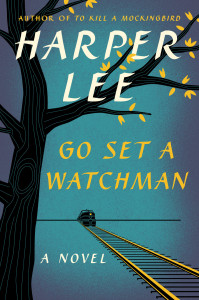
To Publish or Not to Publish: Go Set a Watchman

go set a watchman wikipediaMany years ago, I had the occasion to work with one of Harper Lee’s unauthorized biographers, Charles Shields. As the publicity director for the publisher, the thought of promoting the story of one so intensely famous in the book world had a lot of potential. In reality what I and my senior publicist found was A) Harper Lee was not about to start talking to the press, because this was an “unauthorized” biography and she hadn’t given an interview since 1964. B) there was a tight community of “friends” around Ms. Lee including Samuel Pinckus, who had been interviewed by Mr. Shields, but that was as far as they were going to go with it. Fortunately, the mystique surrounding the woman who was a one book wonder, literally, was very real and the review community came on board to add their opinion on Mr. Shield’s portrayal.
In publishing everyone wants to have the next “whatever was big the last time” such as Harry Potter, The Bridges of Madison County (remember that anyone?), The Secret, Twilight, Lovely Bones, etc. The amount of money at stake is staggering for the book world when most of the time books don’t earn out the advances paid to authors. The circumstances surrounding Go Set a Watchman are particularly interesting in that this wasn’t a new novel, it was actually a draft of what became the most beloved book of all time. The attorney who found it in the safety deposit box contacted the publisher right away—not any of those friends in the tight knit circle around Ms. Lee. In fact many of those people had been banned from her nursing home room many months/years before. The multi-million dollar question is really, did Ms. Lee ever intend for this book to be published? I would say at best she would never have pursued this course on her own but at this time in her life she didn’t much care, and more likely absolutely not, based on my experience working with her group down in Alabama and based on the attorney and her actions.

Harper Lee was a woman of routines. She came from a small town, and kept with the crowd in the town she had known forever. She didn’t make new and glamorous friends, had no major ambitions for fame, and according to a Bloomberg article she still reaps $3.2 million a year from Mockingbird, so she really didn’t need the money. Add to this her being 89 years old and interred in a nursing home, and you can’t help wondering if something is fishy in Denmark.

What we know about the lawyer is that she worked with the Lee’s for a long time in Alice Lee’s legal practice. She took over the practice after Alice died. She and her husband have started a Mockingbird Foundation (Bloomberg), which I have to think is a vehicle for storing the major money coming from the deal. Although Harper Lee is named at the foundation, her attorney has power-of-attorney so in essence, she speaks and signs for Ms. Lee.

For all the people in the world who have wished for a follow up to Mockingbird, I am happy that there is something to fill the void. The “controversy” about Atticus is more about whether or not you like the book and is a subject for book groups, not the national news media. The real story here that has been glossed over is whether or not an old woman who did not stray from a very clear path and intention was bamboozled into doing something she would not have done, had she had the capacity to reason through the situation completely on her own. If we follow the path of Ms. Lee’s attorney now and into the future, I suspect we will find a very wealthy woman who bided her time and took advantage of a family she pegged as a money train a long time ago.

Self-Publishing 101: Front Matter and Back Matter—More Competitive Editorial Strategies for Making your Book Stand Out

In a previous post I talked about how to make sure your book isn’t discarded by a review or media outlet because it “looks” self-published.  I emphasized how important it is to have an editor and an interior book designer work with you on the final product.  Here I am going to reveal the mysteries of front and back matter, which is what we used to call it when I started in publishing.  I have no idea of what people say about it now, but you will find this format in every traditionally published book and in more and more independently published ones as well.  Keep in mind that as tedious as this post might seem to be, I had to do this for quite a few books when I was an editorial assistant years ago.

End Papers: The very first and last physical pages of the book, often a higher quality, thicker paper that may or may not have illustrations.  Generally speaking you will find these more often in hard cover books.  It is expensive to do this and most books do not even have them.

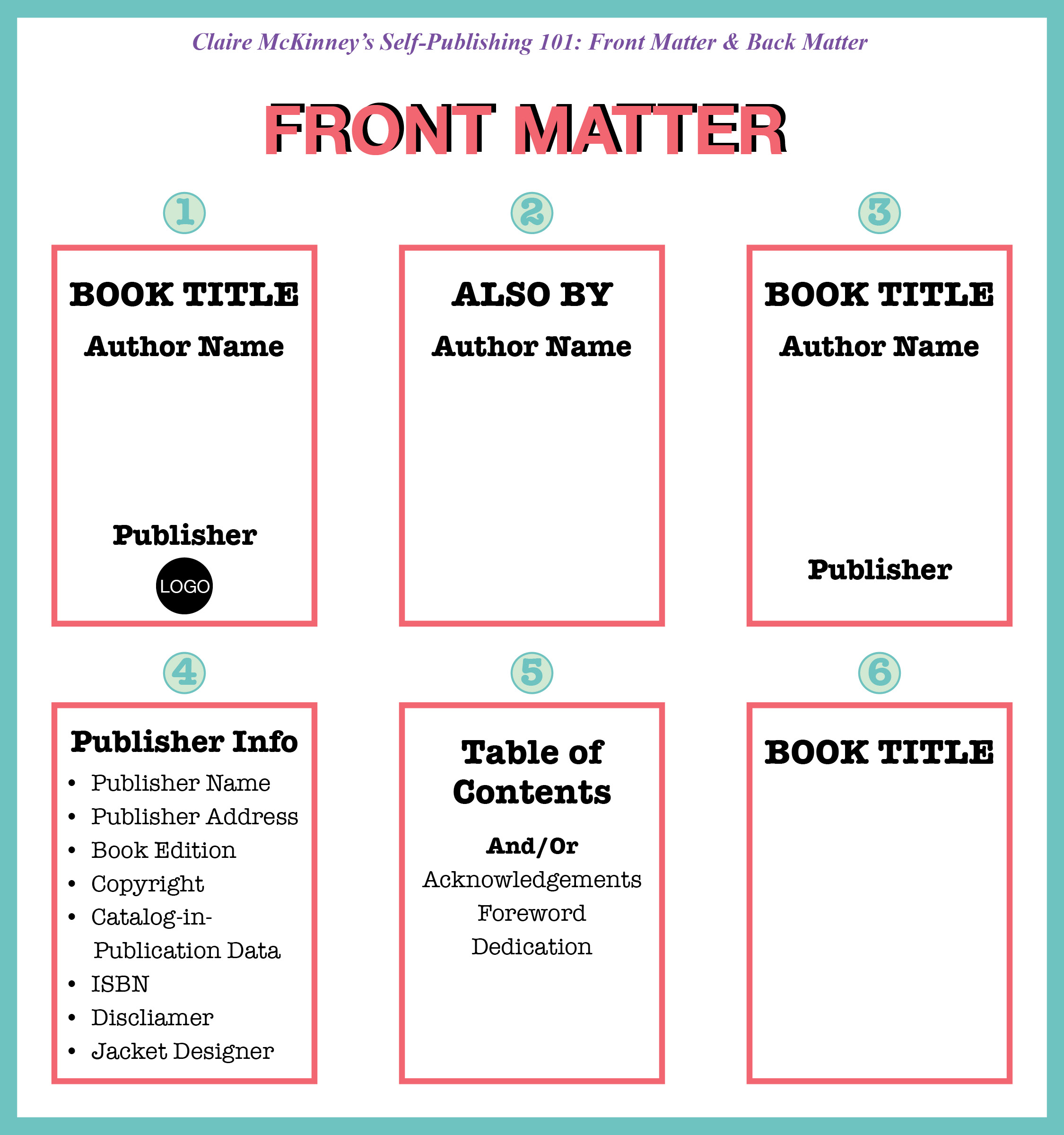
Front Matter: The next few pages of the physical book will include:

  • On the front the title//logo and name of publisher
  • On the back could be a list of  additional titles by this same author
  • Title page with the author/title/and publisher’s name with or without the logo
  • On the reverse side you have all of the vitals related to the book such as the publisher’s name and address/the number of the edition of the book/the copyright information/the Catalog-In-Publication data/the ISBN/Disclaimer/jacket designer’s name/and other detailed items vary by publisher and book
  • Next pages could be a Table of Contents/Acknowledgements/Foreword/Dedication
  • Finally another page that restates the title of the book

Front Matter

Back Matter: Yes, the very last pages after the story has been told will include:

  • A blank page
  • Acknowledgements page
  • Author’s Note page
  • Author’s Bio page
  • Perhaps another blank page

Back Matter

As you can see the back matter leaves a bit of room for preferences on your part.  There are some things like the acknowledgements that can be before or after the actual text.  Regardless though just like not printing your book in courier font (I used to see quite a few of these) if someone opens the jacket and is immediately faced with the guts of the story and not a slower build of information, it will be noticed.

So check out some books on your shelves and see what I’m talking about.  Not particularly exciting stuff here, but necessary nonetheless.