Marketing is Not Public Relations


Right away I am going to lay it out there to say that these two practices are not the same and the line is not blurring.  Marketing and public relations are not becoming one discipline and I am going to tell you why.

Marketing is not Public Relations

According to the American Marketing Association, Marketing is defined as “the activity, set of institutions, and processes for creating, communicating, delivering, and exchanging offerings that have value for customers, clients, partners, and society at large.”   Your strategies and objectives in marketing are ideally supposed to lead to a sale of something that has “value for customers”.  Public relations is “the art or science of establishing and promoting a favorable relationship with the public, ” according to Yahoo.  I prefer to say it like this: pr is about getting the word out through appropriate messaging across many channels.  First, you create the story or message you want to broadcast, and then, via traditional and digital media, you propagate the information.

It is clear that by definition these two are not the same in terms of their intentions and outcomes.  It is also easy to see why people get confused.  But the issue is not about either discipline.  It is about the tools we use to do the job.

No Digital PR?

A bunch of years ago everything became digital and digital marketing was born.  Was there an equivalent in the public relations world? No digital pr?  This is where the problem started when marketers began thinking they were pr experts and vice versa.  In actuality, the functions of marketing and public relations are what they have always been, with the exception that we all need to know how to function effectively in a digital world.

We need to know how to tweet, post, use hashtags, analyze our efforts, and create opportunities to build relationships.  The difference between marketing and pr here is that marketing wants to bring in a paying customer, whereas public relations is trying to create an image, impression, or relationship.  When pr has built the audience and forged the relationships then marketing comes in for the kill to get that product sold.  Public relations is a craft about words and pictures that tell a story about a brand.  Marketing wants you to buy that brand, go to that concert, rent that hotel room, etc.

Company/Individual = Product

Recently I came across an article that substantiates my point:   In it, the writer, a pr person, was discussing the travel industry and rental properties.  She says there is more crossover between marketing and pr, but there is a very good reason why it looks that way.  She says, “as technology has connected not only us much more deeply with each department’s previously distinct audiences but also those audiences with each other, the line between marketing and PR has blurred. This is especially true in the vacation rental industry where the company is the product when you are recruiting new owners to your program.”

This does not mean that the line has blurred.  This is a result straight from the internet that has to do with “celebrity”.  It applies to artists, authors, musicians, and individually branded businesses.  Our society has a culture where your level of celebrity or fame equals the amount of influence you have.  When the person or entity behind the product is the public image, success becomes dependent upon that person’s relationship with an audience.  This is how it works: PR shapes the brand and image using messaging and imaging and then marketing joins in with advertising and direct mail to encourage a sale.  Did I say it already? Marketing and pr are not the same.

Working Together

What is absolutely true is that it has become even more important for marketing and pr to work together.  The problem is sometimes there is a turf war between the two.  Everyone wants to use the fun tools and tricks available in the digital marketing toolbox.  Fine.  There is more than enough work to go around.   We need to understand the differences in what we do so that we can work effectively to promote our people and products.  They say it takes a village, you know.
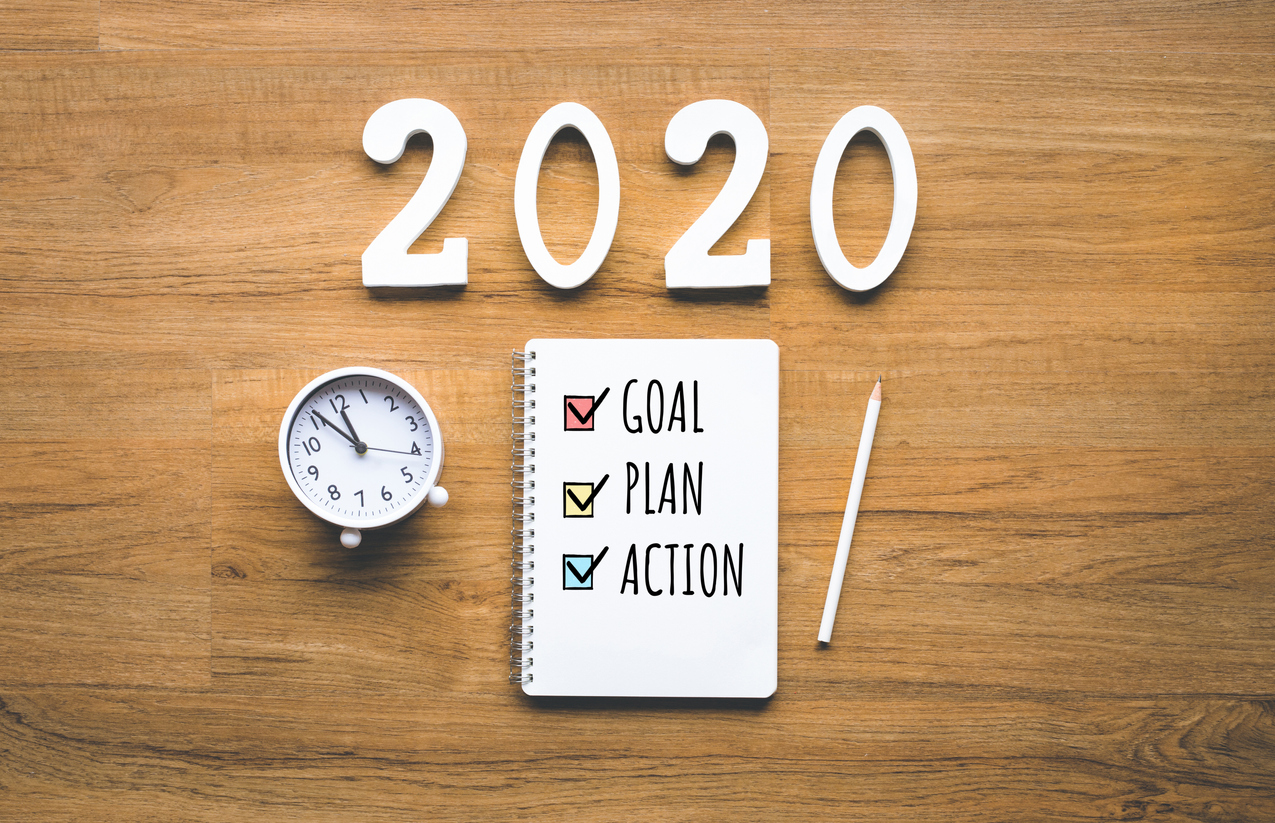
Getting from Goals to Tactics in Social Media Marketing

Working with a marketing group recently I realized that many people have a difficult time getting from goals to tactics in social media marketing.  The tendency we have is to set a goal and then reiterate the goal in different forms in the additional planning stages which are: Goals-Objectives-Strategy-Tactics.  I have learned that improper identification in each of these categories can:

a. have you running in circles trying to get to the goal.

b. cause tears of frustration because you spent hours with a team discussing your high arching goals and when you got back to your desk you realized that no one on the team has any idea of how you are actually going to achieve them.

c. cause you to give up on goal setting because, heck, the goal is to grow, right? Who cares how we get there?

Sound familiar?  Here is how I distinguish the categories, which makes it easier to understand the process of getting from goals to tactics in social media marketing.

What are Goals?

I’ve learned that goals are not specific.  I used to think increasing followers on a social account was a goal.  Wrong.  A goal is what you will achieve for your business/career/interest by increasing the follower count.  So the question to ask yourself is, what do you need or want to see happen in the future?  Are you looking to sell a product?  Start a workshop? Build a community around an issue to affect change?  These are your goals.

Business Objectives and Strategies

These steps are more quantifiable.  Let’s say my goal is to build revenue around a new product line for my business.  Right now I sell shoes and I want to add handbags as an additional sales stream.  The objective would be something more measurable such as selling an average of 10 handbags a week over the next eight weeks.

The strategy is about how you are going to sell those handbags.  Will it be a new promotion to current customers? An Instagram promotion with a branded hashtag?  Facebook Ads? Google Ads?  Are you selling online and in brick and mortar stores?  If so, you need to make sure your online promotion aligns with what you are offering in your stores. (It’s important that these things match so you don’t alienate any of your customer bases.)


Tactics are your To-Do List

The tactics are literally the things you will do on a regular basis to implement your strategy, meet your objective, and accomplish your goal.  In this case, if you want to use a strategy based on your marketing to your current customers with an exclusive sneak peek and sale, you might want to use these tactics:

  1. Send out an announcement to your current list about the new line and follow up for two weeks with teasers leading up to the “opening” to current subscribers.
  2. Start a Facebook group for Insiders or use another platform to curate your most dedicated customers and use a campaign similar to your email marketing to capture people who don’t open their emails regularly.

Each goal may have more than one objective and/or strategy that you want to use.  You need to list your tactics for each one as specifically as possible so you know how you are going to get what you are aiming for.  For an introduction to different social platforms and how to use them, download our eguide.

Back-to-School

I recently enrolled in a Master of Science program in Digital Marketing after years (ahem) of marketing and selling across all platforms (terrestrial and cyber) and multiple industries.  I have always been skeptical of what you can gain from an advanced degree when you have a lot of applied experience.  Well, for this lesson, my big educational moment is about reinforcing the process and its importance.

I lean toward the creative category of business persons.  Although I am also very good at execution and management, I have a lot of ideas.  When you are working in a marketing discipline ideas and follow-through are great.  But you need to be clear about what you are doing or you could waste time.

I have found that this style of structured and disciplined planning makes it much easier to manage and quantify progress.  I suppose in the internet age of marketing “old dogs” really can and must always learn new tricks.


CoVid 19 Lingo: Spin or Substance?

As a communications expert in the midst of the CoVid 19 pandemic and the news, I have noticed and sometimes worry, about the buzz words and language used to describe our situation.  Are words and phrases like the “new normal”, “unprecedented times”,  and “social distancing” meant to placate the masses and give us meaning when everything seems out of control? Did the federal and state governments hire the same public relations company?  Is CoVid lingo spin or substance people?! Rather than toss all of this around I decided to do a bit of research on the phrases mentioned above to get an idea of where they came from and what they mean for the future.

Social Distancing

One of my big “aha” moments came from a New York Times article about the history of “social distancing”.  I highly recommend you check it out because these words tied together are not an accident.  They represent a policy first put together by the George W. Bush administration to be used in the case of a pandemic.  Apparently, the Avian Flu (bird flu) and 9/11 motivated Bush to figure out a bio-terrorism defense plan.

Two doctors and the 14-year-old daughter of a scientist are the three founding members of the “social distancing” policy.  It ultimately suggested that if there was a highly contagious disease two things should happen: 1) Shut down all the schools because studies showed that they would be a major source of spreading the contagion. 2) Shut down all public events that would draw crowds in close proximity.  Fun fact from the origins of the social distancing policy, according to the New York Times, “Drs. Hatchett and Mecher were proposing instead that Americans in some places might have to turn back to an approach, self-isolation, first widely employed in the Middle Ages.”

New Normal

I really despise this term.  To me, it means that someone out there is determining what this “normal” is going to be like and that makes me nervous.  So I went in search of answers on the internet and a site about English language and usage.

Guess what?  In American history the first time the “new normal” became a part of the vernacular was after World War I.  It is predominantly used in business when there are extreme economic developments and other business concerns.  Also, the phrase “new normal” was adopted as a regular part of public discourse after 9/11 and most recently after the financial crisis of 2008/2009.

What I also learned is that disaster often precedes the use of “new normal” and that the transition to this period is a point of debate.  This addresses my initial concern about a defined normal. Should the “new normal” be envisioned followed by a process of “carving the measure of transition to suit its requirements”? Or, can the process be more organic and settled by what circumstances ultimately dictate?

Unprecedented Times

According to Dictionary.com, unprecedented is an adjective meaning “without previous instance” and “never before known or experienced; unparalleled.”   The first time a leader used the phrase “unprecedented times” was in 1641.  It was John Finch, Speaker of the House of Commons.  A Thesaurus is a great tool to look for other words to describe our situation.  But, since this has been a long-used phrase, maybe it is “go-to” in these circumstances.

What is the point?

So, in answer to my question is CoVid lingo spin or substance, I would say, from my unofficial review, that it is both.  As people consuming the news, we don’t need to use “unprecedented times” because that’s what we’re hearing.  And if politicians are thinking that they can orchestrate a “new normal” when it took them long enough to dust-off the “social distancing” policy from 2005/2006, “normal” may have to retire as a word altogether.

Taking Advantage of a More Equal Selling Landscape for Indie Authors

What do all independent authors and publishers want most?  (Okay, other than an Oprah recommendation or a New York Times book review.)  Book distribution to booksellers.  But what if all of a sudden there are no bookstores and all publishers, indie and traditional, are vying for the same online sales?  It’s time to step up and take advantage of a more equal selling landscape for indie authors.

The Advantage for Indies

Indies have had to come up with ingenious ways of marketing themselves online for years.  While traditional marketing departments have certainly been utilizing digital marketing tactics, indie authors have developed their skills without the benefit of a big brand behind them.   And, in most cases indies aren’t promoting dozens of books at one time.  In an age where specificity, target audiences, and niche development are key, indies have the edge.

Also, from what I’ve been reading even after things “get back to normal” there may still be distribution problems such as supply chain issues, printing delays, and paper shortages while manufacturers and distributors try to stabilize their workforce and operations.  If you haven’t considered that this could be the time to take advantage of a more equal selling landscape for indie authors, start now by optimizing all of the aspects of your publishing and marketing tactics.

Five Things for Your To-Do List

  1. Book Product Presentation:  How does your book look?  Is your jacket professionally designed?  Is your interior designed?  Do you have a standard copyright page?  Did you have your book copyedited? Proofread?  Make sure your product can stand up to a traditionally published book as far as the quality is concerned.
  2. Website/Social Platforms: If you don’t have the money or time to revamp your entire website.  Or if your site already looks fabulous the way it is, make sure you have your new book on a page with all the requisite “buy” links and a synopsis.  Also, check all of your site’s social links to make sure they are working.  So many times I’ve gone to a website and tried an Instagram link and found it broken.   Be ready for any traffic you’ve generated to have a good experience and these basic things will go along way toward making that happen.
  3. Content Marketing/Social Media:  Go back to the basics of managing your shared media by posting at least two blogs per month and sharing on social media.  Facebook/Instagram at least twice a week and Twitter at least once a day.  Engage with followers and do a Google search every day on your topic/theme to see if there are any articles, quotes, or related content you can post in real-time.  Everyone loves to have their content retweeted or commented on, so be a friendly social user and engage, engage, engage.
  4. Bloggers/Podcasts: Reviews and interviews are still happening on these venues, even during this national emergency.  However, you should check the websites to make sure they are still accepting review copies the same way.  Some places may need you to contact them first and then send an e-galley to minimize contact points.
  5. Traditional media: If you have a topic that relates to what is in the news, can support a current story, or offer something new and credible, then, by all means, ping some journalists and producers.  But if you aren’t sure you should, don’t pitch people.  Also, subscribe to HARO so you can get a list of different stories/sources the media are working on.  You can respond directly to the HARO links to present yourself and your work.

To read more about the changing face of publishing today, check out these two articles:

New York Times, March 16, 2020

Interview, Nathan Bransford and Mike Shatzkin, April 1, 2020

Good luck and stay safe!


Publicity 101: Publicity and Book Promotion During a Crisis

Unfortunately, “publicity and book promotion during a crisis” has been a recurring theme throughout my career in publishing.  I was the Associate Director of Publicity at Little, Brown when September 11th happened.  Since then there have been a series of storms, hurricanes, and financial crashes.  Our current state of affairs with an international pandemic is probably the most daunting.  But as I said in a webinar I gave last Friday, books entertain and inform us by telling stories that offer an escape.  They also document a history that we can look back on to try to find answers about what we might expect during and at the end of our struggles.  Since we know that books (and their authors) can be helpful in a difficult time, the question is how do we publicize and promote our work right now?

Important Questions to Answer

First, we need to be clear about our personal intentions, which are to “sell” our messages, brands, services and/or books.  Maybe selling products for money isn’t our main mission, but we are all trying to remain relevant and to continue to generate awareness of what we can offer.  I tell my clients that my rule of thumb is to consider how what we are promoting helps people during this time.  I  pose these questions:

  • Am I offering news-you-can-use and expert help for people experiencing stress or anxiety?
  • Can I provide information that will move the story forward in a meaningful way?
  • Does my promotion offer a welcome distraction from the negativity in the current conversation?
  • Can I express my message in a manner that shows empathy for people who may be suffering in some way?

Each of the above relates to a specific kind of writer, expert, and book.

    • News-you-can-use is usually provided by experts.  In this case medical doctors, psychologists and financial specialists.
    • The aforementioned types can move a story forward, but so can human interest stories.  News sites and networks are lacking original coverage and there are only so many times they can report numbers and government policies.  Real people and what they are experiencing can capture the attention of audiences who are looking to identify with others.
    • Promoting your novel, whether it is a mystery or historical, is a great way to offer a distraction from the day-to-day.
    • Finally, expressing empathy and hope is often related to religious leaders, spiritualists, and anything related to inspiration or mind/body/spirit topics.

Engaging with Media During CoVid19

Many people are wondering where they can promote and publicize when producers and journalists are overwhelmed.  The internet is the answer.  Original, quality content and distribution of it in a smart and thoughtful way is going to be the best practice for most people.  See our last blog post regarding social media planning and strategy for some ideas.  You can also visit the Hootsuite blog for articles about the latest trends in social media and content.If you have a human interest story or you are an expert hoping to get some air time on the national stage, you need to do your research.  Watch/listen/read the media outlet you want to be a part of and make sure your information fits in with what is being covered.  Look for journalists by searching articles on Google related to your topic.  One thing that is very important in these times is that we don’t bombard people who are already stressed, like everyone else.

If you have any specific questions related to publicity and book promotion during a crisis, you can email me at claire@clairemckinneypr.com.  You can also subscribe to our newsletter on our website which will notify you of free weekly webinars.  Thank you for reading and stay safe.