
Publicizing a book? What to expect and when.

to do listWhat happens next? —A question I am asked all the time when it comes to a publicity campaign for a book, especially from new authors and clients. It’s time to lay down an outline of the process so you are armed with enough information that you can move on to other things on your list.

Let’s think back to economics classes where we used the infamous widget to represent all products and publish our own “mock” book called The Widget World Guide, which has a publication date of August 12, 2014, six months from now. Your have a publicist, Jen, whom you’ve hired or been assigned by the publisher. Now what?

First, we work backwards from the publication date in order to plan out the campaign with some facts in mind:

  • Magazine and trade publications are considered “long leads” and their lead time is anywhere from four — five months.
  • Newspapers and blogs have shorter leadtimes, but still like to have time to consider books, so let’s say they need 3 — 4 months to look at your book for review. Features consideration is tighter and can happen 2 months ahead of publication.
  • Radio can be pitched 2 — 3 months in advance depending on the program.
  • National television, like morning shows, may need up to 4 months.
  • Event planning in bookstores needs to happen at least 4 months ahead of time to get the best stores.
  • Lectures and other speaking engagements are booked at least 6 months to a year or more in advance depending on the venue.
  • So with this information in hand, here is a tentative calendar of to do items for Jen leading up to The Widget World Guide’s publication in July.

PUBLICITY PLAN
THE WORLD WIDGET GUIDE
PUBLICATION DATE: JULY 12, 2014

FEBRUARY

  • Consultation with author to go over the plan and discuss author’s contacts, social media profile, and to brainstorm ideas.
  • If author does not already have social media accounts, create them and work with author on populating content.
  • If author has a blog or wants to blog, discuss ways to maximize the effectiveness of content.
  • Ask publisher/author if and when there will be advance copies of the book to send for review consideration and media outreach.
  • Reach out to off-site venues for events if applicable

MARCH/APRIL

  • Prepare press materials
  • Prepare media lists
  • Send out mailing of review copies/press release to long leads, national media, and book review editors
  • Set up bookstore events if applicable

MAY

  • Start follow up with newspapers and blogs
  • Follow up on long lead mailing (magazines, trades, nationals) to secure reviews/interviews three weeks after mailing has gone out.

JUNE/JULY

  • Continue contacting and firming up plans with long leads, newspapers, nationals and blogs.
  • Schedule any travel arrangements for August events.
  • Send out press release and event announcements to local media in event markets.
  • Book local media
  • Follow up with regional radio programs and book interviews
  • Create and maintain schedule of interviews and appearances

AUGUST

  • Confirm interviews two days prior.
  • Send links of reviews/interviews to author and publisher
  • Pitch additional media
  • Continue follow up on any potential coverage that has not yet come through

The scenario above is the “ideal” time frame given that materials are available in advance and everything goes as planned. I’ve also left out many specifics that would be for your individual campaigns. This is meant to be a “guide” not the manual on how to mount a campaign.

media

So having stated all of those qualifiers, I hope this is helpful to people starting out in the process. One thing about publicity and public relations is that there is no “one way” to do things after everything is said and done. Each book/campaign requires analysis on an individual level and a good campaign will be one made especially for you. But we do know that media operate on deadlines and there is a lot of competition. I like to be ahead of the curve and get out there as early as possible, but I’ve been doing this long enough (nearly twenty years at this point) to know that a good PR person will shift strategy and compensate when she has to in order to make sure her client is going to receive the maximum coverage and have the best possible outcomes.

How much does it cost to hire a publicist?

I’m going to answer the many requests I’ve received to try to shed some light on how much it costs to hire a publicist.
The short answer is fees vary mainly according to the services offered and the size of the firm you hire, but one thing I will say that for the most part it is a commitment that will likely run you thousands not hundreds of dollars.

I’ll address size first because that’s pretty easy to explain.  I don’t think I need to tell you that if you were to hire one of the big international New York-based firms, you would be talking six figures and you would be getting a lot more than just a publicist–it would be a more holistic public relations campaign that includes marketing, messaging, and more.

Then there are specific book and author-related firms that have offices in major urban areas that probably will charge a significant project fee to start.  Any services like event and media booking in tour cities, social media outreach, etc. are billed additionally.  On a book-by-book basis the contract will be set up for a certain period; they will provide written memos throughout the campaign with a final wrap-up at the end.  Generally speaking these firms (and some of the owners are friends) have been around for a long time.   They are very thorough about their media relations and have good reputations.

Now let me turn to the services aspect of hiring a publicist, because this is where the rubber meets the road.  There are people and companies who offer individual “a la carte” options for campaigns for less than what it would cost to do a full campaign.  Some of these are:

  • Sending your book out to a specific list of reviewers.
  • Sending a press release out to select radio, tv, print, and online producers and editors.
  • Radio tours with a guaranteed number of interviews scheduled.
  • Blog tours with a commitment on the number of reviews that will be posted.
  • Media training.
  • Individual market campaigns, such as a firm that specializes in booking Los Angeles or Chicago media and events.

In order to minimize your costs you may only ask for a mailing or a blog tour.  But you need to understand going into the deal that other things you may want or need for your project, you will have to figure out for yourself or buy more services from the same or some other company.  Some of the businesses that handle these jobs are online-based and you may never actually speak to a person.  This is how they keep their prices in the hundreds, by offering specific services to a large number of clients at once.

If you hire a boutique public relations firm that specializes in books, authors, or spokesperson branding, you will likely either pay a project fee or a retainer on a monthly basis.  It will depend on what you need and how much you want the company to do for you.

A full campaign can include social media monitoring, strategy, and outreach; customized press kits; media relations for tv, radio, print, and online; events; single market media bookings (like tour markets); marketing to associations, libraries, universities, booksellers, etc; and any other great ideas you and/or the agency devise.

The costs related to the kind of relationship with a client that includes individual attention, phone meetings, flexibility, and what I consider to be a long term, quality connection between the client and the firm will definitely run several thousands of dollars.

The main considerations for you  to ask are: What kinds of services do you need?  What kind of relationship do you want to have with the company you are working with?  How much work can you do on your own? What financial resources are reasonably at your disposal?  Can the company you want to work with negotiate with you to give you the best array of services at a price that is mutually agreeable?  And also, can you purchase specific services from the same company that will give you the best of both worlds–a more personalized campaign and lower costs.

Remember that public relations is an actual skill, and although they teach it in universities, the best way to learn is by doing and from experience, and the level of knowledge your person has will be a factor in what it costs.  It also takes a lot of time and although it is sometimes very hard to measure results, rest assured the time and labor is being spent.  I think the most important quality your representative should have is a commitment to you and your work–advocacy.  This person and/or company is going to help you gain exposure and in the event of a book promotion, will actual introduce your book to the world in interesting and exciting ways.

So when you are looking for a publicist know that the old adage rings true here as well– “you get what you pay for”–and if you are looking for someone who is going to work hard on your behalf, it isn’t going to be cheap.

Review: Coming Clean by Kimberly Rae Miller

9780544025837_hres.JPG
Kimberly Rae Miller/Amazon Publishing

The dark side of living with hoarders and the damage it does to a child is what makes Kimberly Rae Miller’s memoir Coming Clean such a great story: she was born into a family that loved her and would do anything for her, but they were hoarders. Her father literally could not get rid of his things, because they were of such importance and he was obsessed by them.

Miller is torn between being angry with her parents for allowing her to live such a life and rationalizing what they do–her mother’s sick and can’t clean; her father just doesn’t realize what he’s doing wrong, even when he’s being dangerous. One day when Kimberly’s friend Carolynn is visiting, her father accuses Kimberly of breaking one of his many radios. She says he “made a fist, and he punched me in the face…I was torn between telling [Carolynn] that my dad wasn’t usually like this, that my parents never hit me, or acting like this sort of thing was no big deal and happened all the time.”

Even after finishing the 250-page book, which was a quick read and extremely hard to put down, it’s hard to admit that there are people who have to deal with hoarding every day. It is a real condition that is often sad, and can have lasting physical and emotional effects. But it is taken lightly by our culture, even to the point of being “funny”. Miller shares her thoughts about the show “Extreme Hoarders”:

“Episode after episode, I cried-not because of what was on the TV, but because I knew that there were people, millions of people, who watched shows like this for fun. People who laughed and feigned gagging, people who would never really understand what it felt like to live like that.”

There is much to be learned about hoarding from Coming Clean, including that one out of every four hoarders is the child of an alcoholic parent, and that hoarding is a form of obsessive compulsive disorder. No matter how many times you clean house, whether by discarding all your beloved things or by moving into a new place, you’ll eventually turn around and face the mess all over again. All that cleaning will never amount to anything if you don’t deal with the heart of the problem.

Shame is also a major theme in the book; Miller is embarrassed by the way her parent’s live in filth, and it’s difficult for her to let other people see that:

“‘I’m not doing this alone. Rachel and Tim will be on their honeymoon, and frankly I’m sick of asking her and Anna to clean your apartment. You have no idea how humiliating that is for me.’

‘You don’t think I’m humiliated?’

Apparently not humiliated enough to hire someone to help as opposed to taking advantage of my friends.”

Coming Clean is a darkly comic confession from a woman who has needed to pour her heart out to the world about what she faced as a child living in a “hoarding” environment. Although depressing at times, the author shows us that she has proved strong time and time again, facing the horrific childhood of living in a house full to the brim with objects, rats, no running water, and fleas. When her parents finally sell the house to move into an apartment, and hopefully a smaller space that won’t allow such devastation, they discover that someone has been living in the attic of their house without their knowledge. Their hoarding had become so unmanageable that someone else was living with them, and no one had any idea. Nothing can be more disturbing than that.

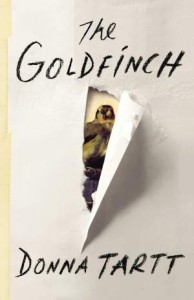
Review: The Goldfinch by Donna Tartt

GoldFinch
Donna Tartt/Little, Brown and Company
“I’ve made a fortune off it, and I would really like for you to have it all to your own again-you know, the thing itself, for old time’s sake, just to have, to really be yours, keep in your closet or whatever, get out and look at it, like in old days, you know? Because I know how much you loved it. I got to where I loved it myself, actually.”
The Goldfinch
The Goldfinch is full of intricate ties and coincidences, and every event that takes place somehow relates back to one moment, when he was a 13-year-old boy whose mother was killed in a terrorist attack at a New York museum. At the time of the explosion, Theo’s mother was in a separate room from her son, looking at the painting of The Goldfinch by Dutch artist Carel Fabritius. After being knocked out for some time, Theo thoughtlessly steals the painting and wanders out of the museum, The Goldfinch under his arm, completely ignored by the police and everyone he passes, until he finally reaches his mother’s apartment. From there, the story continues to go downhill for Theo, as he is taken by his estranged alcoholic father, to a new, seedy home in Las Vegas.
While in Las Vegas, Theo befriends an outsider like himself, the Russian-born and substance-abuse expert, Boris. Boris drags Theo down, and the two find themselves spending their days drinking incessantly and doing whatever drugs they can get their hands on. Meanwhile, the painting, like his mother’s ghost, haunts him at every twist and turn. Finally giving in to his fear of discovery and guilt for his impulsive theft years ago, Theo wraps The Goldfinch heavily in cardboard and rags, deciding never to look at it again, but at the same time keeping it close by.
The painting symbolizes Theo himself: he is chained to his mother’s death as long as this goldfinch is chained to a post. He can’t get rid of this painting, the same way he can’t shake off the memories of his mother and the terrorist attack that has single-handedly destroyed his life. He grasps for solace in dark things, such as drugs and lies, and only searches for the bad within the good he does have. As Boris tells Theo, ten years after the two have left Las Vegas, of their young drinking days, “I was trying to have fun and be happy. You wanted to be dead. It’s different.”
At times Theo is confused by his feelings for Boris, and the relationship borders on something more than their friendship’ They’ve both been through such rough experiences and have no one else to love, and therefore they depend on each other. Boris can hold Theo tightly at night not because he is in love with Theo, but because he loves Theo, as his closest confidante, the one person he can always depend on. But Theo, a born-and-bred New Yorker, can’t handle the careless Las Vegas lifestyle, and after his father dies, he runs away back to New York City, leaving Boris to fend for himself alone.
Years later, Boris comes to New York City to find Theo and admits that he stole The Goldfinch, thinking that Theo would have already discovered the textbook Boris put in its place. But the artwork has been preserved by Theo who has kept is wrapped up tightly and in storage. He is completely shocked when Boris tells him that he switched the painting with a math book and has been using it as a tool in illegal dealings: “I switched it. Yes. It was me. I thought you knew. Look, am sorry… I had it in my locker at school. Joke, you know… I swear, I wasn’t going to keep it.” All those years, Theo had been harboring guilt and fearing the authorities, when he was actually off the hook.
From then on the tone of the book shifts and becomes more fast-paced, as if Tartt finally decides she wants to get to the point and is tired of the story’s drawn-out plot. The audience is swept out of the US and into Amsterdam, where the painting is being held as collateral by drug dealers. During a violent scuffle for the painting, Boris gets shot and Theo saves the life of his boyhood friend by shooting and killing the enemy. The next few chapters becomes a hazy, discontented mess as Theo throws himself into drugs and illness while deciding whether or not to commit suicide because they did not save the goldfinch from the drug dealers, just as Theo cannot save himself.
The Goldfinch is a sad, beautifully written journey of the tormented soul of Theo Decker, a boy who tragically lost his mother and with her, his morals and sense of self. The Goldfinch explores the dark side of a person while perfectly delivering the message that life is only temporary, just like a painting that can slip from one’s grasp so easily.

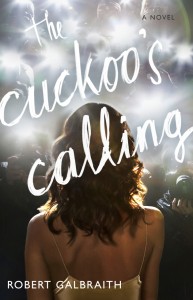
Review: Cuckoo’s Calling by Robert Galbraith

Cuckoos Calling
Robert Galbraith/Mulholland Books

“He had never been able to understand the assumption of intimacy fans felt with those they had never met.”

The Cuckoo’s Calling

The Cuckoo’s Calling by J.K. Rowling as Robert Galbraith is about an ex-army man and private investigator Cormoran Strike and Robin, his pretty, young, temporary assistant, and their quest to get to the bottom of an unexpected suicide. Although they are concrete characters, neither are particularly interesting.

The heart of The Cuckoo’s Calling is the compelling and heartbreaking story of Lula Landry, a beautiful but dead superstar model who was harassed constantly by the paparazzi, and how their interference led to her ultimate decision to commit suicide.

The Cuckoo’s Calling is a fictional account and an allegorical dig about the world today, and how obsessed we are as a society with the lives of celebrities, dead or alive, and how even friends and families of celebrities are not immune to being the subjects of overblown stories in the media. Society treats these actors, models, musicians and the myths surrounding them as reality, when there is so much we don’t know and are not supposed to know about other people’s private lives.

The novel goes through the process of Strike slowly uncovering bit by bit pieces of the truth surrounding beautiful Lula Landry’s death by trying to experience life through her eyes–he goes out on a night drinking with a model friend of Lula’s, Ciara Porter, and Lula’s ex-boyfriend Evan Duffield; he meets with Lula’s homeless friend Rochelle, who is oddly murdered only hours after meeting with Strike; and he and Robin snoop around Lula’s favorite clothing shop, where they find more answers from the gossipy saleswomen about how Lula was acting on the day she died.

The Cuckoo’s Calling is Rowling’s second jab at writing in the mystery and crime genre. It was not an easy book to read and I could only read a few chapters at a time, since much of the writing felt flat. It is a solid mystery, but not one that I would recommend as my first choice. There are much better mysteries and thrillers that are far more engaging like those from Gillian Flynn or classics from Agatha Christie. If you are just getting started in the mystery genre, I would consider picking up something from a more established writer of these tales. The Cuckoo’s Calling won’t blow you away.