Being on TV

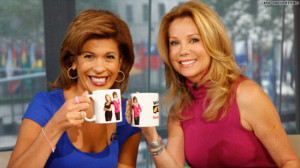
Kathie Lee and HodaLast week I had a unique opportunity, especially for a publicist.  I was asked to step out from behind the curtain to offer my knowledge and expertise about publishing on national television!

It was the “Today Show” on NBC. I’ve booked and escorted many, many authors to this show over the years.  For some we’ve prepped with four hours of media training.  For others who may have had media experience, we would coach them on making sure to mention their book, issue, or idea, even if they weren’t asked directly.   We tell them what not to wear (black, white or red), and that we will see them in the green room before the segment. Simple.

Well guess what?  It’s not that simple, and I’ve secretly known this, but to actually live it is an entirely different story.  So here are the highlights:

Monday afternoon: Producer friend and colleague asks me if I know about self-publishing to which I answer “yes.”  After checking with me to make sure I have been on camera in the past, she sends me to the segment producer for a phone meeting to make sure I can answer the questions related to the segment.

Tuesday morning: While waiting for a train to NYC, I talked to the producer for about 25 minutes and filled her in on my perspectives.  She said it was a go if I would be available tomorrow–STOP!

(Did she say tomorrow?  You mean I won’t have time for a haircut, manicure, or TV segment clothes shopping?)

Wednesday morning: Head to the studio in a town car that picks me up at 8:00AM.  Arrive at studio.  Hustle into hair and makeup and see the show is starting.  First up, reality TV show stars who are parents with “alternative” parenting practices–all of us in the makeup room groaned.  Next, a fuss about where the Franklin and Bash actors are and if they have shown up.  A quick check on the walkie-talkie finds all is well and Franklin and Bash are “makeup ready.”

I stare into the mirror and think, I really need a haircut and why is my hair looking like a football helmet?

Still Wednesday morning: We are ready to go on. Kathie Lee Gifford and Hoda Kotb have arrived.  I and my co-guest (who is really the main attraction, a self-published author and wonderful person: Donna MacDonald) sit on the bar stools on set. I run my answers through my head and check to make sure that I’ve crossed my legs in the optimal position for those 10 TV pounds.

When we go live the first bit is a taped segment then a question to Donna.  Now a question to me.  Then a question to Donna.  And…

The segment was over.  They had run over on the earlier bits and we had to rush through and get off the set to make room for the finale.

And still Wednesday morning: I am returned home in the car.

I wonder: What did I say? Was my 30 seconds of fame alright? Will my comment spark any interest or inspire?  Was it worth doing?  Did I blow it?

In essence a thousand thoughts run around in my head, the ultimate one being that as a publicist who has “done” this hundreds of times, I should be an expert.  But I will tell you that it is definitely an experience that is only learned through experience.  Yes, I had many tools and a lot of information at my disposal, more than the average person might have.  But it is not easy, not simple.  It is building yourself up for a main event, and then coming down whether it goes according to plan or not.  The fact that I often bustled my charges on to even more interviews after this one is a testament to their endurance.  I wanted an ice cream sundae and a nap.

Friday: Haircut, thank goodness.

You can see the clip on the NBC “Today Show” website here.

Self-Publishing Series Case Study: Will bookstores sell your indie books?

Dictionary Series - Politics: independentShort answer is yes, it is possible to get brick and mortar bookstores to take your self-published books, but it isn’t an easy option.  The simplest course is to hire someone to get your e-book set up on every available platform including Nook, iBooks, Kindle, Kobo, etc., and then market like crazy online.  But today I am highlighting an author and how his perseverance with booksellers continues to pay-off, over a year later.

A gentleman hired me to work on his debut novel.  It was well over 450 pages and he wanted to print it in hardcover–did I mention he was doing this by himself?  The book was professionally edited, a compelling story, and he did everything he could to maximize the actual look and feel of the product with beveled edges, a beautiful cover, and decorated end papers.  Next, he set up his own press, where he featured other previous non-fiction work (of his)  as well as his upcoming titles.

Now, he wasn’t a person who had grown up through the digital age, and the whole Twitter, Facebook, Tumblr, and Goodreads world was not something that came naturally.  What he was hoping for was attention in traditional newspapers like the New York Times, which I told him was not going to be an option, even though we did try.  In the old days (like 10 years ago) if you wanted to build interest in a novel by a new author, one path to success was to market heavily to the independent bookstore market.

But independent bookstores are not necessarily selling venues for independent writers.  Booksellers have been hurt by the advent of etailers and the decrease in sales of print books just like everyone else in publishing.  They have only so much shelf space and they have seen and heard every pitch.  But that didn’t daunt us, or our author, in this scenario.

In fact we put together the most thorough list of independent booksellers in the Northeast, along with the local chain.  Our author set his hardcovers up with a distributor for legitimacy and also just for ease of distribution.  I mean whose back can hold up packing and shipping cartons of big hardcover books from their house?  He also offered traditional publishing terms with a 40% discount to booksellers off the cover price and free shipping BOTH WAYS.

Then we all hit the phones.  “You are representing who?  And What?”;  “Send it to me and I’ll see what I can do.”; “I have a pile a mile high of potential sellers”  These were some of the responses we received.  But we marched on with the knowledge that there were 2000 copies of this bad boy to get out the door.

We emailed and pitched with every possible thing we had; we offered additional marketing materials and advertising; we even offered to give them the books if they just tried to sell them during their busy seasons.

In the meantime, our author was setting himself up for appearances where he promised to show up at the store, sit at a table, and simply sell and sign the books for the store.  I think between what we set up and what the author did himself, we had almost twenty stores for him to visit.

In the last couple of months I’ve been receiving requests for copies of the novel’s book jacket for event promotion, from Barnes & Noble to independent stores.  I hear the book has gone into a second printing.  It is just over a year since the book was originally published.

I was told that E. Lynn Harris sold books out of the trunk of his car before becoming a bestselling (romance) author.  It’s not the same genre and it’s not the same time period, but I learned a few things from this experience:

1. Literally “never say never.”

2. If you leave your pride and ego at the door, much can be accomplished. (If it isn’t already, this one could be inside a fortune cookie.)

I’m not necessarily recommending this way as a means to a selling end, but I am just pointing out that there is always an extreme case out there where something initially thought impossible, becomes possible.  Was it the best course of action?  It was what our author and the book needed in order to get noticed.  Did it get the book where we wanted it to go?  There are movie options being discussed and books definitely got sold.

Branding: Why is it important?

What is it about branding these days?  I will argue that before radio, tv, and now the Internet, what you had to say was more important than what you represented or how the masses “felt” about you.  I’m sure there were stars in their midsts but without the power of satellites and jet planes, the number of people in your fan club was probably pretty small.

Enter radio and all of a sudden there are dozens of voices out there, perhaps talking about the same thing. Add tv and its not just what they are saying, but how they look on screen. Add the Internet and now part of the game is about how many people can be entertained in 140 characters or less.

Recap: We used to be invested in the ideas and information we consumed because we had to DO something to get it– either actively listen or read it. Now, we are bombarded with hundreds of thousands of images and sound bites. Our attention spans are limited and our loyalties shift rapidly.

For these reasons, I think the “brand” has become king. In order to cut through all of the chatter, you need to know your audience, attract as many of them as possible, speak to them in a language they can appreciate, and look the part you’re playing.

Without trying to explain how branding works for each and every scenario, product, and person, I’ll list a few examples of good branding that may help illustrate how it works:

SUSAN B ANTHONYPolitical Activist/Author: I once worked with an author who wrote a book about the rise of brands that was very controversial and sold a lot of copies. I guess it made sense that she would know all about branding herself, and she was super specific. There were some media outlets she absolutely had to do because they related to her message and kept her close to her core audience. She had a uniform consisting of jeans and short black boots with a blazer. She did not go anywhere publicly without a professional blowout for her hair.
 

jamespattersonJames Patterson: From jackets to a crew neck sweater, this former advertising guru knew how to brand his books and make a lot of money doing it. See the Harvard Business Review article on his success and what he did to get there. (This article has 16 pages and the HBR does charge for the download unfortunately, but the gist is in the abstract.)

AMAZONAmazon: What do you think of when you hear the name Amazon? That’s what the brand has become. For me it represents a retail outlet where I can get almost anything I want with two-day, prepaid (I’m a Prime member) shipping. Practically instant gratification, which is a cultural norm these days. They started with books, shipping boxes that show up with a “smile” in the logo, and a certain kind of shopping experience that has carried on and angered nearly every publisher and book retailer.

You are going to be on TV! Now what?

messyclosetYou just booked your first live TV media appearance for your publicity campaign! This is exciting! But you’re also starting to feel a twinge of anxiety. The only media experience you’ve had has been over the phone in your pjs.  No one was there to inspect you outfit, your makeup, your posture, yikes!

One of the first questions we are asked by our clients when we book them on television, whether it’s local or national, is “Do they do my makeup in the studio?” and “What do I wear? Do they provide me an outfit?” Unless it’s for a national talk show, the answer is almost always going to be (a disappointing) no to makeup and for all shows no to a predetermined outfit.

Since most TV interviews will not provide makeup services, make sure you arrive makeup ready. Don’t be excessive and heavy—wear what’s normal for you, make sure to apply foundation to even out your skin tone (men and women), and get a solid amount of sleep so you don’t look tired or worn-out on air.

Dressing for live television is not as complicated as you may think—before trying on a multitude of outfits, step away from the closet and think about how you want people to see you. How you look for your interview mirrors how you want to be perceived. For example, if you want to be thought of as serious and authoritative, a suit would be your best option; if you want to be seen as funny and warm, a more casual outfit can work.

Some tips on what to wear:

  • Dress conservatively—don’t wear clothes that could be distracting.
  • Mild patterns, but not striped or vibrantly colored busy ones
  • Neutral colors and earth tones

Do not wear:

  • White, which makes you look invisible
  • Red, which looks fuzzy on camera
  • Black, which washes you out

The best way to settle any nerves you may be having (and swat away those butterflies) is to prepare yourself as much as possible beforehand. Sometimes producers will send you the interview questions the day before, sometimes not. When it comes time for the actual interview, stay calm and remember why you’re there—to discuss your new book or idea! You also want to:

  •  Make sure to define your key message—what do you want to tell the audience?
  • Show passion in your subject matter, but don’t be too aggressive
  • Be positive
  • Remember to practice your answers if you are given the questions beforehand. If not, brainstorm the likely questions and practice answering those.
  • Use your publicist as a resource, remember that’s what he/she is there for!

Now that you’re ready, take a deep breath, relax, and smile for the camera!

What is a platform?

authorspeakerThe definition of platform from Merriam Webster describes it as a raised surface; akin to a stage; and “as a declaration of the principles on which a group of persons stands.” When I started in publishing I never heard this word used to refer to an author.  By the time I left and started my own business, “platform” was nearly as common as “the” in conversation.

I was on the pub board or committee that makes publishing decisions, and with non-fiction especially the question was “well what’s his/her platform” and “what’s he doing to keep his name out there” and in moments of desperation “can we get him one?”  I could tell you stories, but let’s stay on point.

When we (those of us on the promotion and production side of the book business) talk about author platforms, I would like to say that we are very specific and there is a clear set of items we are looking for.  But there aren’t.  Like so many other things in the business this also becomes subjective and frankly also has to do with the subject of the book itself and how well it can sell on its own merits.

So to help everyone get a better handle on having a platform, I will list some of the things I think are included and in my experience do help with promoting an author or any spokesperson for a brand or a book.

1. Professional affiliations and credentials: Are you a Ph.D. or an MD?  Are you a member of any organizations or think tanks that have regional outposts and built in audiences or are weighty enough to warrant getting requested to comment on things by the New York Times (Brookings would be one of these, but so would your local rotary club)?

2.Visibility:  Do you have a speaking schedule or are you invited at any time to talk about your subject to groups?  Are you a “go to” person in your field.  Has any of your research (if this applies) been published in peer reviewed journals?

3. Media Experience: National television these days is sooooooo competitive, primarily because every Tom, Dick, and Harry including those residing in the White House like to appear on it.  Producers want to see tape of you in an interview on a reputable television program or station.  Have you been interviewed on the radio?  The newspaper? Online?  In general have you ever been exposed to the media to talk about your subject or story. (This also can be tricky in that overexposure isn’t good in advance of a book’s publication, but that’s for another post)

4. Contacts: Who do you know?  Are you in a book club?  Do you know your local librarian, bookstore owner, etc.?  How many people could you bring to a live event in your community; in any major city?  We want to know if you already have some ground laid (there’s that platform reference) with potential media, influential people, or just a significant quantity of “fans” in your community who will help spread the word about you and what you are promoting.

Clearly the definition of platform as it has been used in public relations is not the exact Webster’s edition.  Yes, it is about principles and ideas, but it is also, for our purposes, about how well and by whom you are known for them.  If you are an author with a book or a business owner who wants to grow your business, think about how you are contributing to the broader conversation and public opinion.  Then, find a way to insert yourself so the rest of the world can’t squeeze through without stopping by.