Links Roundup, Week of 2/6

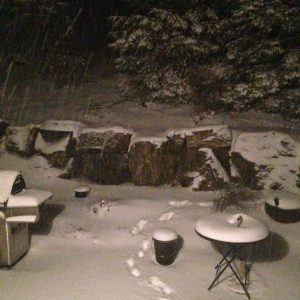
Winter Storm Niko was nuts – but we survived!

4 steps to create a blog or podcast that will enhance your following. [DBW]

How to have the best cover designed for your book. [Reedsy]

Want to self-publish? Don’t be a cheap skate! [PW]

5 social media marketing myths, debunked! [Hootsuite]

Love Babe Ruth? Check out this short story. [Manhattan Book Review]

Factors to keep in mind when considering self-publishing. [HuffPo]

The Indie Author’s Guide to Customer Reviews. [PW]

Check out these 10 amazing ideas for creating book titles. [Storify]

Self-published authors give advice to new indie authors. [PW]

What you need to know to get your book distributed. [Jane Friedman]

Publishing 101: Creating Your Author Bio

Author Bio Claire McKinneyPRWhen I was young and naïve, I thought the bios you read in theater programs and on the backs of books were written by someone who had a lot of nice things to say about the person. I didn’t know that individual people wrote their own author bio.

From that perspective, I started to categorize them by how much ego the subject had in order to write such glowing praise about himself!  I was amazed at how much people touted their own accomplishments.  I don’t know about you, but I find it difficult to write about myself. I feel much more comfortable singing the praises of other people.  However, in order to sell our books, we all need to try to channel that egomaniac and compose a good author bio.

There are two forms to consider when crafting your author bio. One is a brief, three-to-four sentence paragraph that can go on the back jacket of your book.  The other is a lengthier explanation that could be found on a separate page in your book under “About the Author,” or as a separate page in your press kit with your author photo.

To help you get started on your author bio, try answering some questions:

  • Where did you go to college and what degrees do you have?  If you attended an MFA program or writer’s retreat, where was it?
  • Where do you live? How many children/pets do you have?
  • What do you do during the day? (i.e. what’s your day job? Are you a full-time care giver, doctor, consultant, etc?)
  • Do you have any previously published articles or books?  What are they?
  • Are you a member of any organizations, or do you serve on the boards of any non-profits? What are they?
  • What are your special interests?
  • Have you been interviewed by, reviewed in, or wrote for any media outlets?  What were they?
  • What is your website address? What is your Twitter or Instagram handle, Facebook or LinkedIn page, or Snapchat name?

Now take a look at everything you have noted above ,and highlight all of the information you would want to read about someone with a book like yours.  What gives you credibility?  What makes you interesting as a writer?  People these days are accustomed to looking in private bedrooms on the internet, and they feel entitled to know about their authors.  This holds true even more if you have written a work of non-fiction.  Then your education and other items that relate to your credibility become super important.  Once you have pulled out all of the material that could go into your bio you are ready to write.

If you haven’t already looked at author bios in the books you have on your shelves, do so.  You can model yours after theirs to fit the style and length that you need.  The short bio should list your credentials and education, especially for non-fiction; your affiliations; and perhaps the state and/or city in which you live.  You are not required to print your address for all-the world to see, but telling people the region where you reside is a nice way to give readers some perspective on what your lifestyle might be.   You can mention your kids and pets as well, but it isn’t a requirement.  Again, these are just additional personal details that bring potential book buyers closer to you as a person/writer. On this page is an example of a short bio from Laurie B. Levine, a family therapist with a young adult novel.

For the longer bio you should write about three paragraphs that fit on approximately three-quarters of a page.  In this version you will have more freedom to talk a bit more about why you wrote the book and what your interests are.  Just take a look at the questions you answered earlier to find the material with which you have to work. Here is an example of a long bio from Merle Bombardieri, a psychotherapist with a self-help guide.

Any bio is an opportunity for an author to come out of the book to say hello to a reader.  Make it your own.  In the longer author bio, it is easier to be you. If you have a sense of humor, let it come through.  If you are more straight-laced and like to stick with the facts, then do that.  Most of all do not be afraid to talk about the good things you have done.

After you have written your long and short forms, have a friend, family member, neighbor take a look and provide some feedback.  I like to have several sets of eyeballs check out anything I write and I always accept feedback (even if I grit my teeth during the delivery of it). Get it done and check it off your list.

Links Roundup, Week of 1/23

The New York Times is cutting a range of bestsellers lists. [PW]

Roxane Gay, by the book. [NYT]

Star Wars fans prepare yourself for The Last Jedi. [E! News]

What’s the ‘code’ for a bestselling novel? [Guardian]

Even the most successful in traditional publishing are going the indie route! [PW]

Do you know about the dynamic writer/publisher relationship? [Women Writers]

Nail down that elevator pitch! Those 15 seconds could make or break you. [TBD]

We love cover art – check out the best ones from 2016! [NYT]

Inspirational books that could actually change your life! [The EveryGirl]

Virginia Woolf would have been 135 this week. [NYBooks]


Links Roundup, Week of 1/16

American treasure Betty White’s birthday was this week! [EW]

Publishing needs a blockbuster of a book in 2017. [LA Times]

National Book Critics Circle announces its finalists. [NYT]

Why SEO is a necessary skill for authors. [Where Writers Win]

A last goodbye to BookCourt. 🙁 [LitHub]

7 social media trends to watch for 2017. [PR News]

Rumpus has a new owner and editor-in-chief. [Rumpus]

Using self-publishing to teach your students. [The Book Designer]

When your creative process isn’t productive. [PsychCentral]

Watch out for Instagram Stories. [Entrepreneur]

Why We Support Self-Published Authors

Self-Published AuthorsEvery so often, the argument comes up that self-published books shouldn’t be considered authentic, or that self-published authors aren’t serious about their craft.  We have worked with many self-published authors, and here are some reasons why we support them:

Many indie authors have their books put together professionally: A lot of self-published authors invest their time and money to hire a book designer, website designer, copy editor, proofreader, and others, to create a book that is perfect for them and of high quality. All of the authors that we have promoted have had their books professionally edited and designed.

Self-publishing is the route that worked best for them. There are many examples of authors who self-published before their books were published traditionally, like E.L. James and Lisa Geneva, who wrote in a 2008 blog post:

“Before I self-published my first novel, STILL ALICE, last summer, I tried going the traditional route. I spent a year querying literary agents. But no one wanted my book. I was sitting in a holding pattern with a completed novel and no one reading it, waiting to find out if STILL ALICE was ‘good enough,’ waiting to find out if I was a ‘real writer,’ unable to give myself permission to write the next book.”

After self-publishing, Still Alice went on to get published by Simon & Schuster and was turned into an Academy Award-nominated movie starring Julianne Moore. Who is to say that self-publishing a book won’t eventually lead to bigger things…like an Oscar winner?

They are serious about what they are doing. There are many people out there who are great writers who don’t have a publishing deal. Many of those people have very likely crafted their books for years, were involved in writing workshops or groups, or enrolled in MFA creative writing programs. Many of these people have been rejected, and self-publishing is a resource they have available to put their work out there. We have worked with many authors who spent years writing their novels, memoirs, or self-help books, and these books are self-published, well-written, well-edited, and well-designed.

In fact, some may have had a traditional publishing deal that fell through for a number of reasons. Several authors we have worked with were going the traditional publishing route until something happened: an imprint got shut down, an editor passed away, or the author disagreed with what a publisher wanted to do with a storyline.

Self-publishing was a thing before it was a thing. Authors like Benjamin Franklin, Jane Austen, and Walt Whitman had at some point self-published their novels, according to this Poets & Writers article. In the tradition of literature, self-publishing has been a route people have taken for hundreds of years – but with Amazon, print-on-demand, and other resources, it’s had a bigger boon than ever.

Whether you are a traditional or self-published author, writing is hard work. It’s also an art, and it’s up to the author to ultimately decide which way they’d like to display that art.

If you are a writer who has taken or is considering the self-publishing route, do not be discouraged by negative comments. Continue writing, honing your craft, editing your work, and proudly displaying your art—because you wrote a book, and that in itself is a feat!