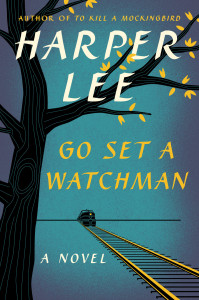
To Publish or Not to Publish: Go Set a Watchman

go set a watchman wikipediaMany years ago, I had the occasion to work with one of Harper Lee’s unauthorized biographers, Charles Shields. As the publicity director for the publisher, the thought of promoting the story of one so intensely famous in the book world had a lot of potential. In reality what I and my senior publicist found was A) Harper Lee was not about to start talking to the press, because this was an “unauthorized” biography and she hadn’t given an interview since 1964. B) there was a tight community of “friends” around Ms. Lee including Samuel Pinckus, who had been interviewed by Mr. Shields, but that was as far as they were going to go with it. Fortunately, the mystique surrounding the woman who was a one book wonder, literally, was very real and the review community came on board to add their opinion on Mr. Shield’s portrayal.

In publishing everyone wants to have the next “whatever was big the last time” such as Harry Potter, The Bridges of Madison County (remember that anyone?), The Secret, Twilight, Lovely Bones, etc. The amount of money at stake is staggering for the book world when most of the time books don’t earn out the advances paid to authors. The circumstances surrounding Go Set a Watchman are particularly interesting in that this wasn’t a new novel, it was actually a draft of what became the most beloved book of all time. The attorney who found it in the safety deposit box contacted the publisher right away—not any of those friends in the tight knit circle around Ms. Lee. In fact many of those people had been banned from her nursing home room many months/years before. The multi-million dollar question is really, did Ms. Lee ever intend for this book to be published? I would say at best she would never have pursued this course on her own but at this time in her life she didn’t much care, and more likely absolutely not, based on my experience working with her group down in Alabama and based on the attorney and her actions.

Harper Lee was a woman of routines. She came from a small town, and kept with the crowd in the town she had known forever. She didn’t make new and glamorous friends, had no major ambitions for fame, and according to a Bloomberg article she still reaps $3.2 million a year from Mockingbird, so she really didn’t need the money. Add to this her being 89 years old and interred in a nursing home, and you can’t help wondering if something is fishy in Denmark.

What we know about the lawyer is that she worked with the Lee’s for a long time in Alice Lee’s legal practice. She took over the practice after Alice died. She and her husband have started a Mockingbird Foundation (Bloomberg), which I have to think is a vehicle for storing the major money coming from the deal. Although Harper Lee is named at the foundation, her attorney has power-of-attorney so in essence, she speaks and signs for Ms. Lee.

For all the people in the world who have wished for a follow up to Mockingbird, I am happy that there is something to fill the void. The “controversy” about Atticus is more about whether or not you like the book and is a subject for book groups, not the national news media. The real story here that has been glossed over is whether or not an old woman who did not stray from a very clear path and intention was bamboozled into doing something she would not have done, had she had the capacity to reason through the situation completely on her own. If we follow the path of Ms. Lee’s attorney now and into the future, I suspect we will find a very wealthy woman who bided her time and took advantage of a family she pegged as a money train a long time ago.
Self-Publishing 101: Front Matter and Back Matter—More Competitive Editorial Strategies for Making your Book Stand Out

In a previous post I talked about how to make sure your book isn’t discarded by a review or media outlet because it “looks” self-published.  I emphasized how important it is to have an editor and an interior book designer work with you on the final product.  Here I am going to reveal the mysteries of front and back matter, which is what we used to call it when I started in publishing.  I have no idea of what people say about it now, but you will find this format in every traditionally published book and in more and more independently published ones as well.  Keep in mind that as tedious as this post might seem to be, I had to do this for quite a few books when I was an editorial assistant years ago.

End Papers: The very first and last physical pages of the book, often a higher quality, thicker paper that may or may not have illustrations.  Generally speaking you will find these more often in hard cover books.  It is expensive to do this and most books do not even have them.

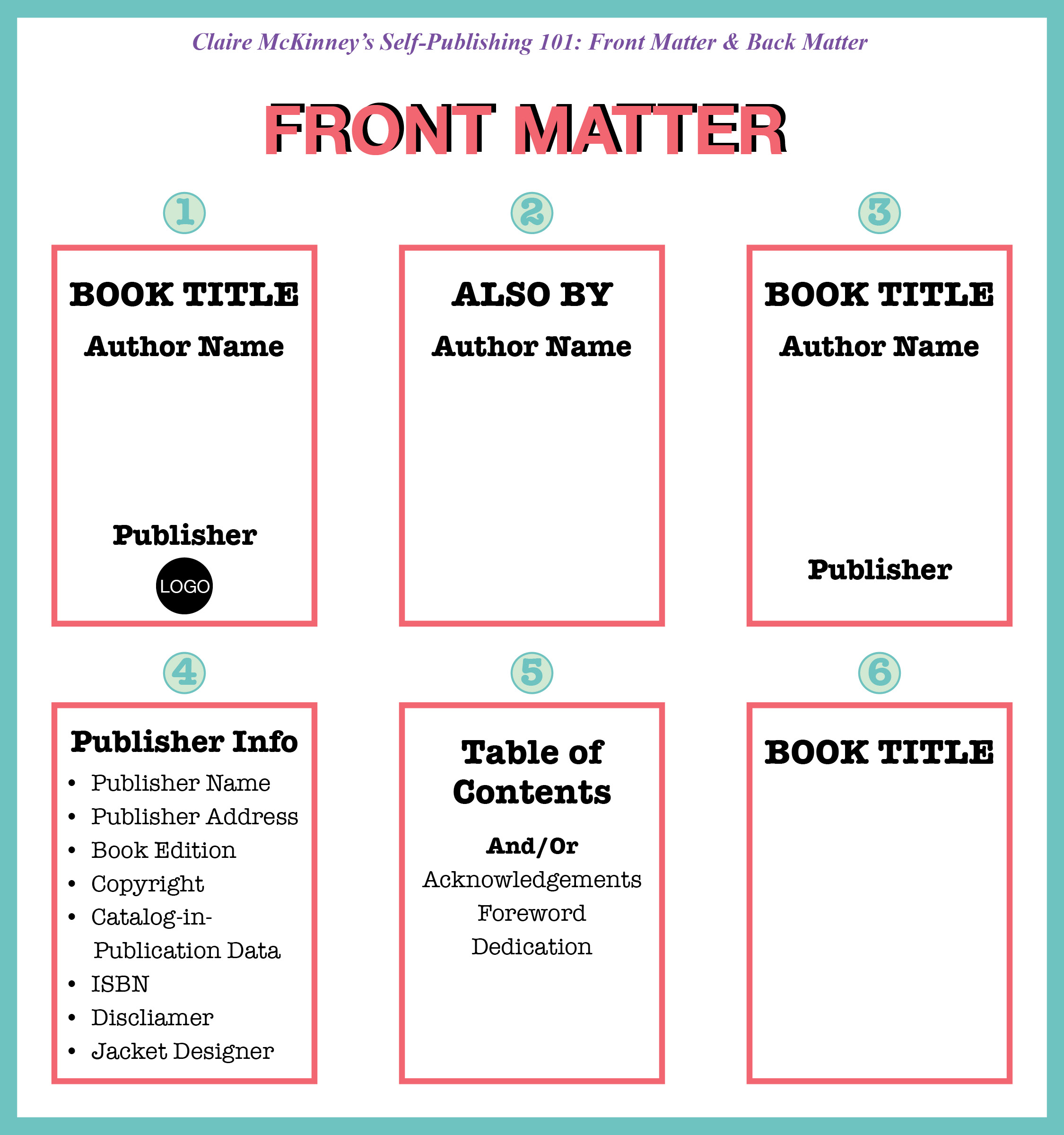
Front Matter: The next few pages of the physical book will include:

  • On the front the title//logo and name of publisher
  • On the back could be a list of  additional titles by this same author
  • Title page with the author/title/and publisher’s name with or without the logo
  • On the reverse side you have all of the vitals related to the book such as the publisher’s name and address/the number of the edition of the book/the copyright information/the Catalog-In-Publication data/the ISBN/Disclaimer/jacket designer’s name/and other detailed items vary by publisher and book
  • Next pages could be a Table of Contents/Acknowledgements/Foreword/Dedication
  • Finally another page that restates the title of the book

Front Matter

Back Matter: Yes, the very last pages after the story has been told will include:

  • A blank page
  • Acknowledgements page
  • Author’s Note page
  • Author’s Bio page
  • Perhaps another blank page

Back Matter

As you can see the back matter leaves a bit of room for preferences on your part.  There are some things like the acknowledgements that can be before or after the actual text.  Regardless though just like not printing your book in courier font (I used to see quite a few of these) if someone opens the jacket and is immediately faced with the guts of the story and not a slower build of information, it will be noticed.

So check out some books on your shelves and see what I’m talking about.  Not particularly exciting stuff here, but necessary nonetheless. 

Happy Summer Vacation! 5 Things PR People Can Do To Keep Sane While Away

You made it.  The big day is finally here and you are headed out of town for a little bit of rest and relaxation.  But even though you try to schedule time off when the world is in slow mo’ it’s still very difficult to “unplug.”  In fact, I would say checking out completely is more nerve-wracking than actually making a plan to address work in a reasonable way while you are on vacation.

Sometimes though, the best of intentions can’t keep you from a media crisis, like the time I had to deal with producers at the Today show while at Busch Gardens in Virginia.  Or the time I had to walk a client through a national media booking from the porch of a general store in North Carolina.

Barring any emergencies, here are 5 things you can do to keep sane and to make re-entry as pain-free as possible:

  1. Make a list of what you want to get done before you leave, and a list of what you are going to do the week you get back.  The “before you leave” list is clear, but more importantly, start thinking of what will need to be done when you return so you have some organization in place.
  2. Download files from your work computer. If you work on a computer at the office, make sure you download anything you might need onto a USB drive.  This way if someone wants a press release or a file and there isn’t anyone else to send it, you will be able to fulfill the request.  Even if you don’t have a personal laptop to bring along, there are internet cafés everywhere.
  3. Arrange for a roaming plan on your phone. This is especially true if you are traveling internationally.  Roaming charges are steep for cell phones, but many carriers offer packages that limit the cost/minute of phone time and allow for some data downloads.  You still need to wrestle the phone away from your tween and teen, but you can be available for emergencies without having to worry about hundreds of dollars on your phone bill.
  4. Out of office on your computer.  This may seem like common sense, but you may forget to do it anyway.  Leave an out-of-office on your email and make sure it sends “once per email address.”  There is nothing more annoying than repeatedly getting messages from someone who is not there!  Make sure to explain that you are on vacation and that so-and-so can be reached to help with immediate needs.  Or you can say you are checking email daily, but for emergencies you can be reached at “x” number.  Most people won’t call you.
  5. Check email twice a day. In his book The 4-Hour Work Week, Tim Ferriss says that you need to limit the amount of times you check your email in order to be more efficient.  What better time to practice this approach than vacation?  So instead of hitting that “inbox” button over and over when you are waiting for someone to get back to you, plan on reading emails in the morning and in the late afternoon or early evening.

BONUS TIP: Relax, have fun, and enjoy this well-deserved respite.  Being in your shoes myself, I am sure you deserve it!