5 Resources to Kickstart Your Promotional Efforts

If you’re gearing up to publish your first book or simply want to know some of the best sources to turn to for fresh marketing ideas and tips on how to promote your book, service and/or product, look no further. We’ve put in the work so you don’t have to.

Here are our top three resources to help get you started with any of your upcoming promotional efforts:

Resource #1: Cision

If you’re looking for some general information about all things PR and marketing, Cision has you covered. In addition to being a top public relations/earned-media software company, Cision also runs an informative blog that PR professionals turn to daily to stay up-to-date on all of the latest news, trends and even round-ups within the industry. Although not specific to strictly book promotion, it still provides useful information that can be applied anywhere.

Resource #2: Buzzsumo 

As many of our loyal readers will know, we can never stress the importance of research enough as it is at the foundation of everything we do. Buzzsumo is a bespoke search engine that we utilize regularly to conduct much of that research into specific topics. It’s a great way to find out what people are talking about as well as discover outlets and journalists to reach out to for potential coverage.

Resource #3: Trello

Another important element to promoting a product or service is ensuring that you’re organized. That’s why we love using a web-based list-making application, like Trello, that keeps our company workflow in check.

Resource #4: Google Sheets

Like we’ve mentioned in the past, another good way to stay organized is by keeping track of every contact/outlet you’ve pitched in an Excel spreadsheet or Google Sheet. Google Drive is a particularly good resource to have in your toolbox because it’s free, and you can share documents with others.

Resource #5: Claire McKinneyPR

Okay, I might be a little biased here, but our blog has some seriously helpful tips, tricks, and insider information across a multitude of different areas like book promotion, digital PR/marketing, personal branding, social media, and even design. Consider us a one-stop-shop!

For more of our latest blog posts, click here.
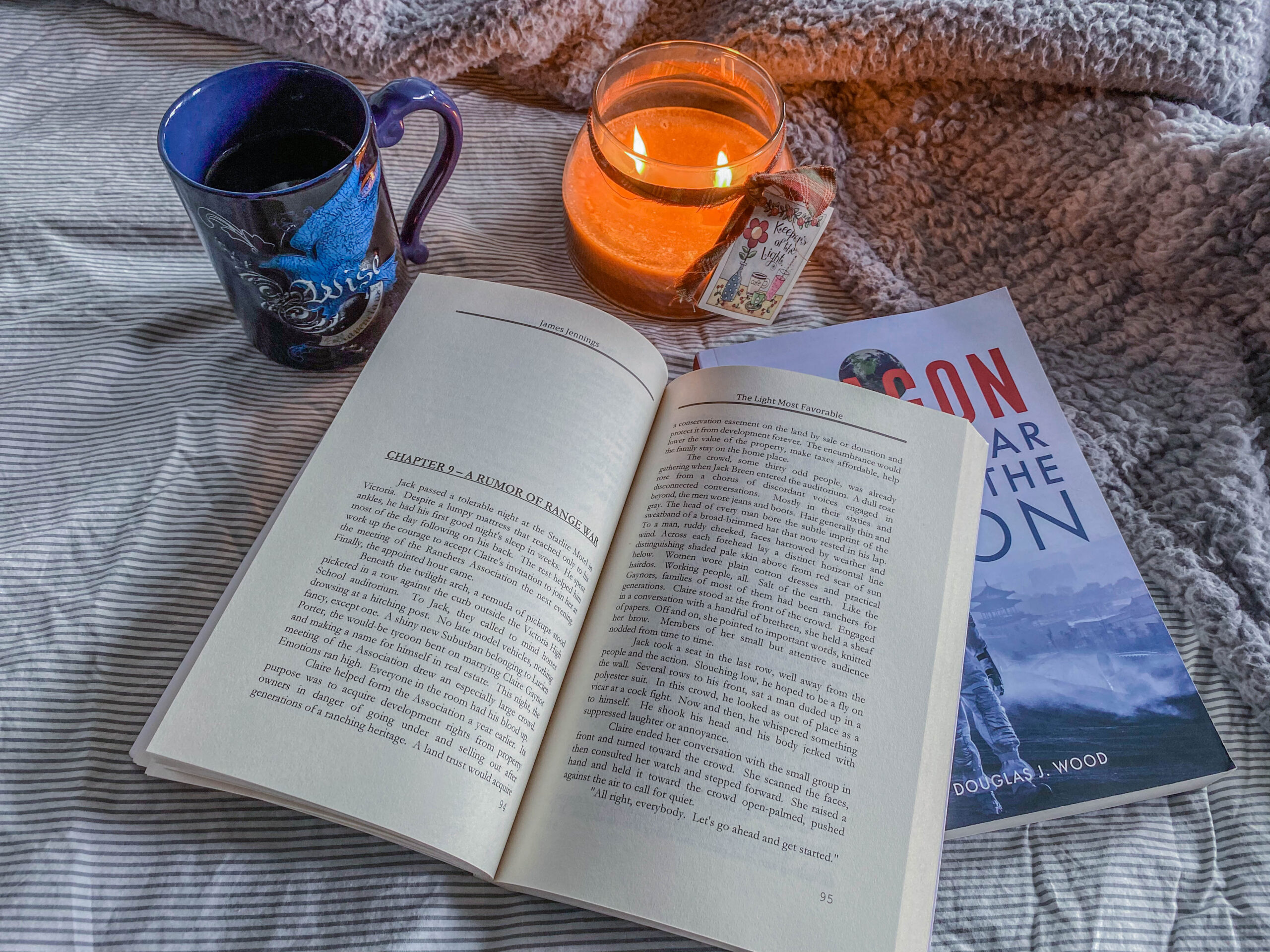


Book Publicity on Social Media: Bookstagrammers

Using Instagram to publicize your book is one of the most cost-effective ways to share your book with avid readers. This is largely because of bookstagrammers. 

What is bookstagram?

A bookstagram is an instagram account dedicated to — you guessed it — books. The bookstagram community itself is massive. It encompasses authors and readers who love sharing their passion for books. 

Using Bookstagram to Generate Awareness Around Your Book

Bookstagram can be a great place to share your book, especially if you have a budget, but we will get to that in a second. One of the great things about bookstagram is that, unlike in newspapers or on the radio, people who follow bookstagrammers and engage with their content are a lot more likely to love books. If you connect with bookstagrammers that have a specific niche that is relevant to your book, then you are placing your book directly in front of an audience that is likely your ideal audience for sales. 

3 Tips for Working with Bookstagrammers

  1. Do not expect large bookstagrammers to share your book for free. Many of these bookstagrammers have huge, active audiences. Would you want to give something of value away for free? Probably not. Smaller bookstagrammers may be willing to trade for a free book — but make sure they have a public profile. 
  2. Research bookstagrammers before reaching out. If you write thrillers, it would be a waste of time to reach out to a bookstagrammer who only enjoys romance. 
  3. Engage with the bookstagrammers you would like to work with prior to reaching out to them. Although this is not absolutely required, it is good etiquette, especially if you are hoping to get something for free. 

If you are looking for other ways to publicize your book, check out the following posts: 

Our Six Step Guide to Earning Local Media Coverage

Book Awards for Indie Authors

Publicity 101: 5 Steps to Curating the Perfect Media List


Book Covers: Hiring a Designer

You have your book written, edited, and you’re now prepping to publish it. Previously, we spent some time discussing how to design an appropriate book cover that will keep your self-published masterpiece from going unnoticed. If you read over our summary on how to design a book cover yourself, you likely have a better idea of whether this is a task you can take the time to handle yourself or not.

If it doesn’t seem like the DIY option is the right fit for you, don’t fret! There is another way. There are thousands of trained professionals out there who would love to help you design an eye-catching and unique book cover – for a price, of course.

Where to Look to Hire a Graphic Designer

The biggest question when it comes to hiring a professional designer is where to start looking. You could start by searching social media using terms such as cover design, book jacket design, or a specific hashtags like #bookdesign. These terms may lead you to some smaller artists whose work you enjoy. You can usually either find a link to an artist’s portfolio through their social media accounts or get a quick snapshot of their work through their posts, which makes for an easy vetting process. Social media allows for direct, quick, and open-ended contact as well when you approach someone about their commission prices.

Other options that might help you quickly sort through many artists and designers who can provide the exact services you’re looking for are platforms like Fiverr, which exist solely for artists to advertise their skill sets and prices in one place. Freelance marketplaces like this cut through a lot of clutter that exists on social media. You can filter your results by whether you need only a book cover or whether you need help with the typesetting process as well.

Beware of Prices that Look Too Good to Be True

With these kinds of services it’s important to note there are people who advertise cheap prices and make use of premade templates, free stock photos, or, at worst, steal and recycle designs completely.  It is my firm belief that when it comes to commissioning a book cover you ultimately get what you pay for. Expect to pay upwards of $300+ depending on whether you want spine and back jacket designs included in your design. Adding in the cost of typesetting will also make the process more expensive. A unique, custom designed cover will cost you more out of pocket, but it will make your book stand out amongst the millions of self-published titles that are released every year. While browsing through artists’ portfolios, make sure to keep in mind the current trends and aesthetics of your chosen genre. Choose a designer whose aesthetics match these trends. You still want the outside of the book to reflect the tone of what you’ve written on the inside.

Basic Etiquette for Hiring a Designer

I’d also like to speak on some basic etiquette for how to approach an artist and inquire about their rates. Most artists are friendly people who want to work with you to see your vision come to life. Start the conversation with a polite greeting and ask them if they are currently open to taking commissions. This is especially important if you have found them through social media instead of a freelance marketplace. If they respond positively, feel free to explain your project and what you’re looking for in a cover and to ask them how much they would charge for it. If their rates are too steep for your budget, it is not impolite to thank them and say it is out of your range. It is impolite, however, to try and haggle with a designer or to criticize them for charging too much.

If you find an artist you like and who you can afford, make sure you read and understand their terms of service before agreeing to payment. Freelance designers often require payment upfront. There may be a no-refund clause in your contract once they have started to work on your design. Always bring something up with the artist if you find there is an issue with their work and make sure you mention any kind of deadline you may have upfront.

Working with artists to bring your concept to life can be an exciting and fun experience. Designers love to hear input about their work when it is a paid commission, and they want you to be as satisfied as possible with the result. So, if the DIY option is just a bit too daunting and you’re ready to start searching for a designer to hire- happy hunting!

Book Review: The Vanishing Half by Brit Bennett

At first, The Vanishing Half by Brit Bennett was not a book I thought I would pick up as I don’t often gravitate toward titles I see repeatedly reviewed by bookstagrammers and reviewers I follow on social media. However, for whatever reason, this book caught my eye and I was intrigued to see what all the hype was about.

The synopsis: The story takes place in a small town in Louisiana called Mallard where everyone knows everything about everybody. It follows two twin girls, Desiree and Stella Vignes, who are absolutely inseparable. But when the pair decide to run away at age 16, it doesn’t take very long for the sisters to lean on their own independence – ultimately losing touch with each other and reconstructing their identities as individuals.

The Vanishing Half is a compelling tale that explores the complexities of race, family ties, sibling bonds, and overall identity across multiple generations.

My review: In the beginning, I became quite invested in the relationship between Adele Vignes (Stella and Desiree’s mom) and Early Jones. A few chapters in, it becomes clear that their relationship isn’t a major plot point, but I wish Bennett would’ve continued that narrative as I found it quite captivating. I also felt that the chapters jumped around a little too much; a lot of time was spent with Desiree’s daughter, Jude, but the story as a whole focused more on the intricate relationship between the twins. Stella got her fair share of “air time,” so I think it would’ve felt more cohesive if Desiree’s perspective was equally addressed.

In addition, I felt the ending was anti-climactic. While there are still plenty of takeaways from the book overall, the second half felt a bit unfinished.

My score: 6/10

For more reviews from the CMPR team, click here.

5 Female Authors You Probably Know By a Different Name

Pen names have many benefits like anonymity or crafting a public person or alter ego. But women have used pen names in other ways as well, such as being able to publish without the bias around their gender or marketing to a male audience. Today, we are going to talk about a few of the many female authors who wrote under male pen names. 

George Sand – Amantine Lucile Aurore Dupin 

Amantine Lucila Aurore Dupin was born in 1804 and became one of the most celebrated novelists in 19th century France under the pen name George Sand. She was a “pioneering feminist” who regularly participated in activities that were considered more appropriate for men at the time. 

The first book she published was a romantic classic, Indiana, in which a noblewoman traveled from colonial Africa to France to find love. You can get the book here

George Eliot – Mary Ann Evans

Mary Ann Evans is another European female author from the 19th century who published under a male pen name. She was known for her characters’ psychological depth and her descriptions of the life of those who lived in rural England. 

In 1858, she published her first book, Adam Bede, under the pseudonym George Eliot, which then proceeded to go through eight printings in the first year. 

Some quotes from the book include:

“Our deeds determine us, as much as we determine our deeds.”

 – George Eliot, Adam Bede

“I’m not denyin’ the women are foolish: God Almighty made ’em to match the men.”

 – George Eliot, Adam Bede

Currer, Ellis, and Acton Bell – the Brontë Sisters

These sisters were the authors of several novels. Anne (Acton Bell) published Anges Grey and The Tenant of Wildfell Hall. Emily (Ellis Bell) wrote Wuthering Heights. And Charlotte (Currer Bell) published Jane Eyre.

The sisters began writing at an early age, and their novels became classics. Would they have if they had published under their real names? We just don’t know. 

More Recent Female Authors who Wrote Under Male Pen Names

Not all women who published under male pseudonyms were from the 19th century. More recently, authors such as J. K. Rowling and J.D. Robb, also used male pen names. 

J.K. Rowling – Robert Galbraith – Joanne Rowling

Most everyone knows who J.K. Rowling is, unless you lived the last decade or so under a rock, but her gender neutral pen name does help her market her books to male audiences. 

But did you know that she writes under another name? 

Robert Galbraith is Joanne Rowling’s pen name for her crime fiction series, the Cormoran Strike Novels. This allowed her to break away from her fame as J. K. Rowling and write her new novels without expectation. 

J.D. Robb – Nora Roberts

Nora Roberts has published well over 200 romance novels and was inducted into the Romance Writers of America Hall of Fame. However, when she decided she wanted to write her futuristic crime thriller series, she published under the name J. D. Robb.  Her pseudonym, J.D. Robb gave Nora Roberts the opportunity to reach a new, more male, audience. 

Although there are many reasons for writing under a pseudonym, these female authors who wrote under male pen names typically did it to write and publish without expectation — however you want to interpret that. As a strategic communicator, I find it incredibly interesting how the name you use to publish, and not just the title of your book, can have such an impact on your sales. 

For more information about book marketing techniques, read our blog post:  Book Marketing 101: Create Visibility for Your Book with these 5 Tips