
Social Media 101: Snapchat and Instagram Stories for Authors

SnapchatInstagram and Snapchat are popular social media platforms for influencers, especially those who are celebrities or are in the fashion industry. The various Kardashian women are perfect examples of Instagram influencers—follow their accounts to get a rounded grasp of how useful Instagram Stories and Snapchat can be for public figures.

Snapchat and Instagram tend to skew young in terms of who is using these platforms, from teenagers to millennials in their mid-30s. As an author it can be useful to tap into these age groups to cultivate a new audience for your books and/or brand.

How both Snapchat and Instagram Stories work is that you take a photo of something (yourself,your dog, something cool you saw) and it disappears after 24 hours of your posting of it, unlike regular Snaps or Instagram posts. Regular Snaps to friends disappear after they are viewed (if not viewed, then after 30 days); Instagram posts are there permanently unless deleted by the user.

Here are 5 tips on how authors can use Snapchat and Instagram Stories:

Use them for exclusive content. Are you in the middle of writing a new book? Snap or Insta-story a line from a chapter you just wrote. Are you writing a short story for a new anthology? Snap a photo of yourself with one of the other authors or editor with something along the lines of, “Meeting with so-and-so today. Can’t wait to show you our latest project coming soon!” Creating some mystery and suspense will excite your followers.

Snap an immediate and intimate glimpse into your life. We all want to know what our favorite celebrities are doing – and snapping photos of themselves cooking food, out to dinner, enjoying a concert, or reading a book achieve that aspect of making followers feel like they are included in their lives. You can do the same thing as an author by taking a video of a book you are reading or a new recipe you are attempting to cook.

Show off your fun side. With all the funny and cute filters available (making your eyes huge, face swapping, giving yourself dog ears, etc.), showing readers how you can have fun will make you more personable.

Hold a contest. Gain followers on Instagram or Snapchat by holding a contest–with the winner receiving an advanced reading copy of your upcoming book, a box set, or a signed copy of your newest release. Hold the contest only on Instagram or Snapchat, but announce it on your Facebook page or Twitter so that you drive new people to your Instagram or Snapchat usernames. For example, post on Facebook: “New contest on Snapchat that I am announcing in five minutes! Go to [username] to see what I’m giving away this week!”

Engage your followers. Because people can message you back on your Instagram stories or Snapchat stories, post a question: “What are you reading today?” or “What are you doing today?” to engage your followers by having them respond in a message. Respond back so that they can feel that you are engaged with them as well.

Even though Instagram stories and Snapchat are similar, you may find yourself inclined to use one more than the other, and that’s fine. Just make sure to use whichever one you favor on a daily basis so that your followers don’t lose interest.


Read more beginner’s tips for social media here.

Book Marketing 101: Create Visibility for Your Book with These 5 Tips

You’ve written a book and published it — but the sales just aren’t happening. The biggest likely reason for this is that no one knows that you or your book exists, even if it’s been uploaded to Amazon. There are thousands of authors on Amazon vying for people to buy their books. That’s why authors need to create visibility so that they can stick out from the crowd.

It can be really tough to put yourself out there and talk about yourself and your work, but if people don’t know who you are, then they won’t buy your book!

Here are some ideas for authors to create visibility for their books:

  1. Visit your local bookstore, retail stores, or library. Dropping by and leaving a copy of your book for the bookseller or librarian will help them learn who you are as a person and give them the chance to look at your book before deciding to purchase. Many indie authors shy away from selling books on consignment, but sometimes it’s the best that your indie bookstore can do, especially if your book is not available through the proper distribution channels or is unavailable for return.
  2. Have a release party or event. Invite friends and family to celebrate your new book at your house, and have them purchase copies there. Or you can have it at a restaurant where you can incorporate the plate price with the price of the book, so everyone who comes is guaranteed a copy. You can also see if your local bookstore will have an event for you, if you are positive you can get enough attendees to come. (Read more about authors events in this blog post.)
  3. Ask family and friends to review on Amazon or BN.com. Supposedly, those with more reviews on Amazon are more likely to be included in the company’s email newsletters and receive more visibility overall–although to be honest, nobody but Amazon knows how their algorithm works. It’s still worth having friends and family post reviews so that it will generate interest for others to read your book. Books with no reviews whatsoever will likely be passed over by shoppers.
  4. Put yourself out there at festivals and conferences. Start visiting local book festivals and writers conferences and hand out cards or copies of your book. See if any of them will put you on a panel. Many festivals have the option for author signings, although you most likely have to pay for that privilege, at least in the beginning.
  5. Make sure it’s easily accessible for purchase. Even though Amazon is the most popular online outlet to purchase books, readers do have other shopping preferences–whether it’s a local store or a Barnes & Noble. Make sure that your website, blog, and social media pages have links to these sites and to Indiebound, so that your audience can purchase through their favorite indie bookstore.

It’s important to get yourself out there in some way, shape, or form to create visibility–whether it’s by putting yourself out their physically or through online channels. You may not sell hundreds of copies at first, but you’ll be on your way to make yourself known. The readers will come–you just need to put your foot out the door.

If you’re an indie author, do you use any of the above ways to create visibility for your books? Tweet about it to us @McKinneyPR!

Social Media 101: 4 Reasons Why Buying Followers is a Bad Idea

buying followers
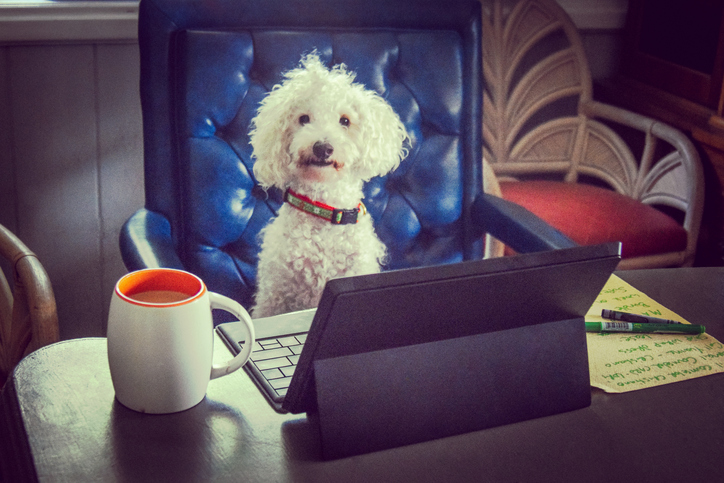
This office dog is confused and upset about why he is seeing so many disturbing spam followers on a Twitter account that is supposed to be family friendly!

A recent article (February 1st) on BuzzFeed said that the Newsweek Media Group has been buying followers and manipulating traffic on some of their websites, and that they are being accused of ad fraud.  The ad fraud part of this story is not my area, but I do have something to say about the other part—buying followers—as it relates to marketing and branding using social media platforms.

There was a time when having 200,000 Twitter followers looked impressive to the naked eye, but those days are long gone.  Now it isn’t very difficult to look through someone’s following on various platforms to find out that many of those 200,000 are spam bots and other kinds of cheap “friends”.  In fact, the people who have more modest numbers of active followers, who engage with them, and build more solid relationships over time, could have the upper hand in social media marketing.

Here are some reasons why buying followers is a bad idea:

  1. The internet is not an alien universe.  The people using the internet and social media are just that—people.  And the rules of engagement apply just as they would at a cocktail party or a business conference.  If you want to grow as an influencer on social media, your audience needs to feel like you are a real person —not a virtual identity with no substance, which brings me to the next point.
  2. Trust is more important than ever. The internet, the very tool you want to use to market your products and ideas, has eroded trust in its own population.  This is partly due to the “bad apples” in the bunch who have figured out how to buy and sell cotton candy entities and canned content.  If someone takes more than a cursory look at who is following you and they find porn (true story) in the form of bots, it will not make a good impression (unless that is what you are selling).
  3. Relationships rule! When there is trust, the chance for a relationship to grow increases.  In a relationship with good communication, the other person believes what you have to say, appreciates your advice and counsel, and may even talk about you with others in a positive way.
  4. Protect the brand. Would you wear dirty clothes to a job interview?  Why sully your brand with ineffective and questionable marketing practices, like buying a fake community?

Perhaps we think that, because we are typing on a keyboard or a phone in our own private spaces, that our anonymity allows us to behave in any manner we want.  Well, it doesn’t.  Companies who engage in buying followers or traffic in order to beef up their potential advertising power may not be doing something illegal, but it is certainly unethical.  If an individual wants to be an influencer, it needs to be clear that community and engagement are a priority.  If bots are all we see, we assume that you aren’t real either.

Check out our other social media blog posts here.

Book Giveaways!

We are now doing book giveaways through Rafflecopter!

This post will be updated with ongoing Rafflecopter book giveaways.

Check periodically for the latest book that we are giving away to lucky readers!

Read more about the books and authors we work with on our campaigns page.

We are currently giving away a copy of Neal Rabin’s adventurous novel (perfect for summer reading) 23 DEGREES SOUTH: A Tropical Tale of Changing Whether… ending on May 16th, 2018 at 12:00AM EST. The winner will be contacted by email, so make sure to check your inbox in case it was you!

“Enjoy with your favorite cocktail!…23 DEGREES SOUTH will capture all readers with its story of two young friends on different paths who intersect within an action packed story.”
– Chanticleer Reviews, 5/5 Stars

“McKinney, a veteran book publicist, has produced a clear, basic road map to publicizing a book. .” – Publishers Weekly
a Rafflecopter giveaway

Amazon Books? Four reasons why booksellers can remain calm

Amazon Books
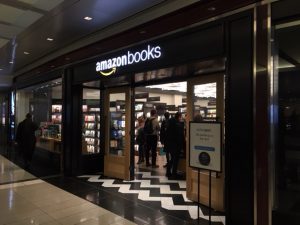
From my visit at the Amazon Books location at the The Shops at Columbus Circle.

It is ironic, and for some it may seem odd, that in the midst of decades of brick-and-mortar bookstores closing their doors, a hugely successful e-tailer like Amazon would decide to venture into the concrete bookstore business with Amazon Books.  Or is it?

I have seen the demise of Borders/Waldenbooks, Joseph Beth Booksellers, and the rise and fall of Barnes & Noble stores; the feuds between the independents and the chains when wonderful stores like BookPeople in Austin, TX thought they were doomed; when Costco and other giant stores started selling large quantities of bestsellers at deep discounts, perhaps underselling the competition; and the power of e-commerce, with Amazon presiding over the field.  Every change in the book business makes the publishing community anxious. Clearly, with some businesses succeeding and others failing, there is a need to be able to roll with the punches.  But perhaps if we take a wide angle view of things we might be able to hold onto a few constants that will create paths of opportunity and assure people that although some things look different, the basic precepts of the marketplace and sales still prevail.

  1. Brick-and-mortar bookstores are not dying.  Yes, chains like Borders are long gone and Barnes & Noble may not be able to support a store every ten miles, but independents are going strong.  According to this article on Quartz, between 2009 and 2015 the number of independent bookstores increased by 35%.
  2. E-book sales are falling flat.  Many sources have been reporting that e-books are falling out of their previous favor.  Let’s face it, devices may be convenient but they have their issues.  Batteries lose their charge and if you don’t have an active WiFi connection you can’t download a new book whenever you want one.  And, if you are reading for content, it’s very difficult to highlight sections and go back to them in the same manner as you would mark or dog-ear a page you need to reference later.
  3. Selling in person is better than selling online.  I attribute this principle to the increase in the success of independents over the past several years.   Real readers, who actually support the majority of the book business front and back list, like to be able to browse and get recommendations for books.  They also like to hang out with other like-minded individuals.  The innovations in indie stores that now offer seating, coffee, parties, and more, have brought customers in and kept this business sector alive.
  4. Amazon Books, while competing in bookstore form, is not doing things like everyone else.  Amazon became a huge success online, and it makes sense that it would not try to duplicate what others have already done on the ground.  Why should it?  I recently visited one of their Amazon Books stores, and it was not like most of the ones I frequent. As a reader, I probably wouldn’t shop there on a regular basis.  The main reason was that there was a smaller number of titles available.  For indie presses and authors this was a benefit because the inventory was a more curated list that covered the usual suspects but also featured books from unknown publishers.  And, because curating titles meant that additional shelf space was available, the books were primarily face out, which can be a boon for publishers without a lot of marketing dollars to spend.  I could also forgo the other products that the store had for sale, like coffee makers and gadgets.  These things diluted the atmosphere and were a distraction.

I got the distinct impression that the Amazon Books location was trying to market to Millennials, which is a big “buzz” word for everyone in any industry these days.  The funny thing is that I meet a lot of younger people who fit this bill, and the ones I know who are real readers prefer the same traditional bookstores I’ve loved forever.  Maybe rather than believing we need to rethink everything we’ve ever known in this business because of change, we should try to anticipate, adapt, and remind people of the core elements of books and buying books that many people share.  It might eliminate some of the hysteria so we can all get back to business (and reading of course).

Have you been to an Amazon Books? Tell us your thoughts on Twitter.